 Cockapoo
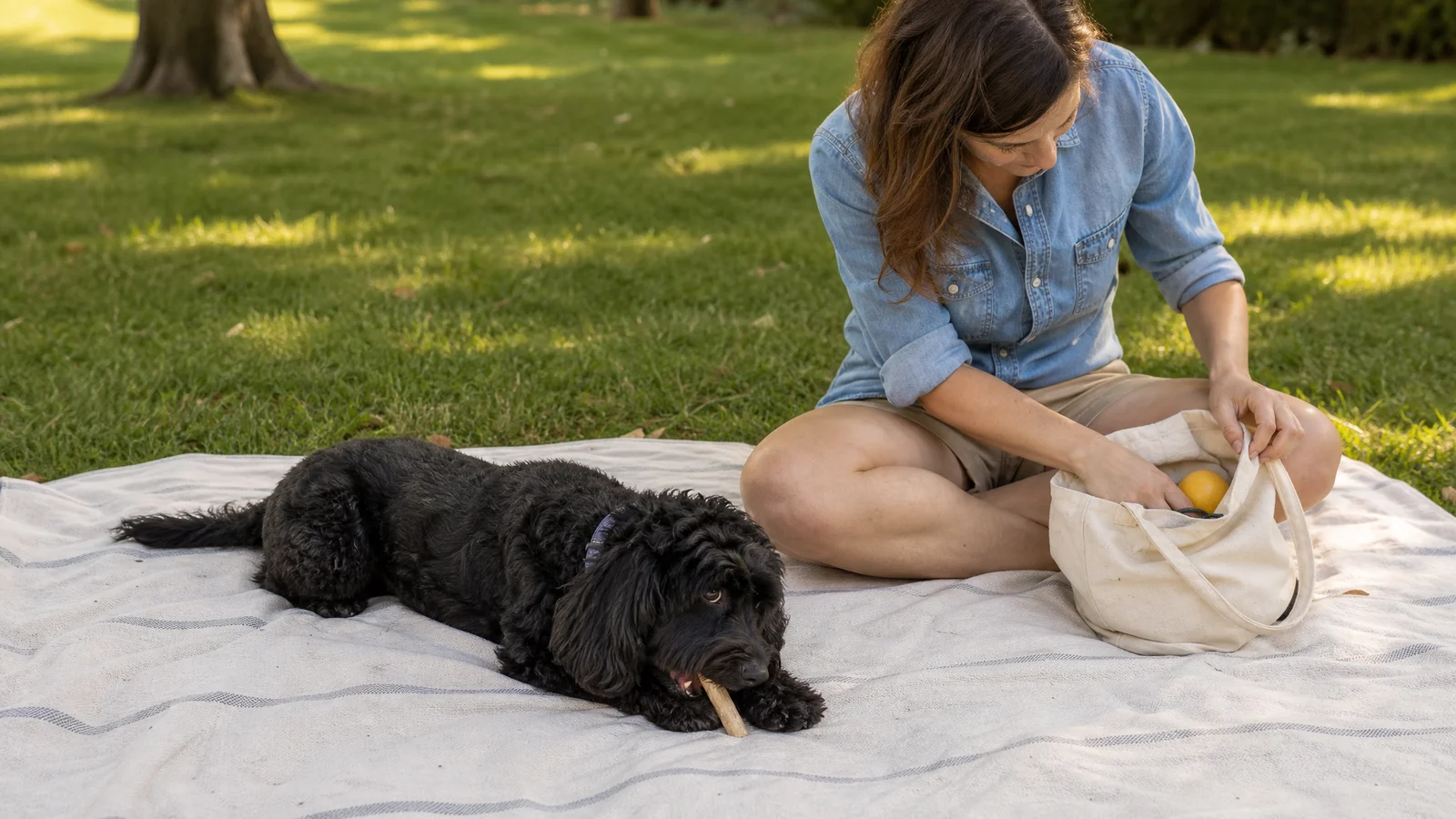
Putting the ball away does not necessarily end fetch for a Cockapoo. The throws may have stopped while the dog still watches your pocket, checks the storage spot or waits for another launch. A useful finish changes what your dog can do next, as well as where you keep the toy.
Enjoying a ball and struggling to disengage are different observations. A playful Poodle and Cocker Spaniel cross may love retrieving, but parentage cannot tell you how much repetition suits the individual. The response after play often gives you more useful information than enthusiasm during the chase.
In this guide, we design the finish before rebuilding the game. That means a comfortable resting option, predictable access to the ball and a release skill taught away from fast movement. You can then add modest retrievals and judge whether your Cockapoo can return to ordinary household life afterward.
A Comfortable Finish to Cockapoo Fetch
Prepare the next activity while the ball is absent. Teaching a settle only when your Cockapoo is already waiting for another throw makes the hardest version the first lesson. Choose a familiar quiet space and practice the pause during an ordinary part of the day, when the dog can notice what earns a reward.
A Resting Place Without a Ball
Place a comfortable mat or bed where your dog already finds it easy to rest. Reward approaching and relaxing there without repeatedly calling them up again. The place should offer a usable pause, not a performance that keeps the dog watching for the next cue. Give them room to adjust their position and settle naturally. Choose moments when you can remain nearby quietly, allowing the dog to discover that resting does not make your company disappear.
Start with what is available. A relaxed stand or pause can be a useful beginning before a longer rest develops.
If the dog watches the toy cupboard from the bed, choose another position or change the room arrangement. The intended resting place may still function as a lookout for the next game. Observe where their attention goes when you stop delivering rewards, since that reveals more than the posture alone. Check this again when another family member enters, since their arrival may be a stronger promise of play than the cupboard itself.
An Ending the Dog Can Recognize
Choose a brief finish phrase and use it when an easy activity actually ends. Follow it with a predictable transition, such as walking to the quiet resting area together. Keep your hands and pockets ordinary afterward. Repeatedly reaching toward the ball storage can keep anticipation alive even when you have stopped speaking.
Practice the transition after low-key play first. The dog can learn the meaning of the finish without having to recover from an exciting chase at the same time.
A suitable quiet activity may help some Cockapoos make that transition, while others settle more easily with company and little happening. Watch the individual response. A replacement toy that starts vigorous play has changed the object without achieving the quieter finish you were trying to teach.
A Household That Lets Rest Happen
Explain the finish to everyone who plays with the dog. If one adult puts the ball away and another retrieves it when the dog waits beside the cupboard, the ending remains uncertain. Make the next planned play opportunity clear to the humans, so the dog does not need to keep checking who might restart the game.
Children should ask an adult before starting fetch. That keeps the location, toy choice and end of play under consistent supervision.
Ball Availability Between Fetch Games
Keep the ball out of sight between planned games if its presence continually draws your Cockapoo back into seeking another throw. Put it away while the dog is comfortably occupied elsewhere. Storage should reduce accidental rehearsals, rather than become a repeated demonstration of something desirable just beyond reach.
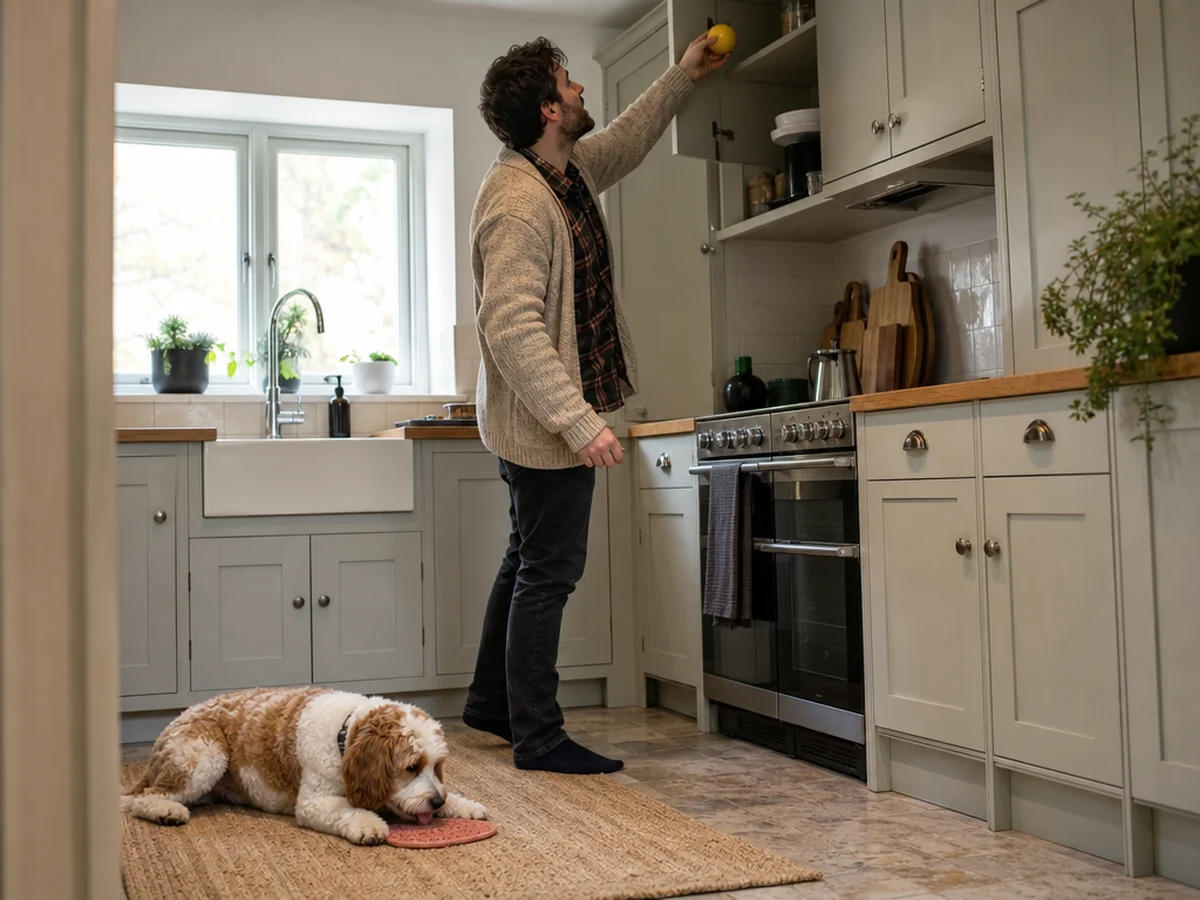
The Cocker Spaniel parent's playfulness is useful context for a cross who enjoys shared games. It does not create an obligation to throw whenever the dog requests it. A varied routine can include exploration, suitable chewing, gentle interaction and rest, with fetch occupying only the place your individual dog handles comfortably.
Look at the circumstances that reveal the toy. A ball rolling from beneath the sofa can restart a game without anyone intending to play. Check under furniture during cleanup, and keep play items in a place the household can manage. Consistent availability is easier to teach when the physical arrangement supports it. Include bags used on walks, since a familiar ball pouch left beside the door can become another place the dog repeatedly monitors.
If barking regularly brings the ball back, the quiet attention requests guide addresses that learning pattern. Meet ordinary needs before changing the request, then make a calm alternative useful. Removing every source of interaction would leave a different problem from managing access to one exciting toy.
A Release Skill for Cockapoo Fetch
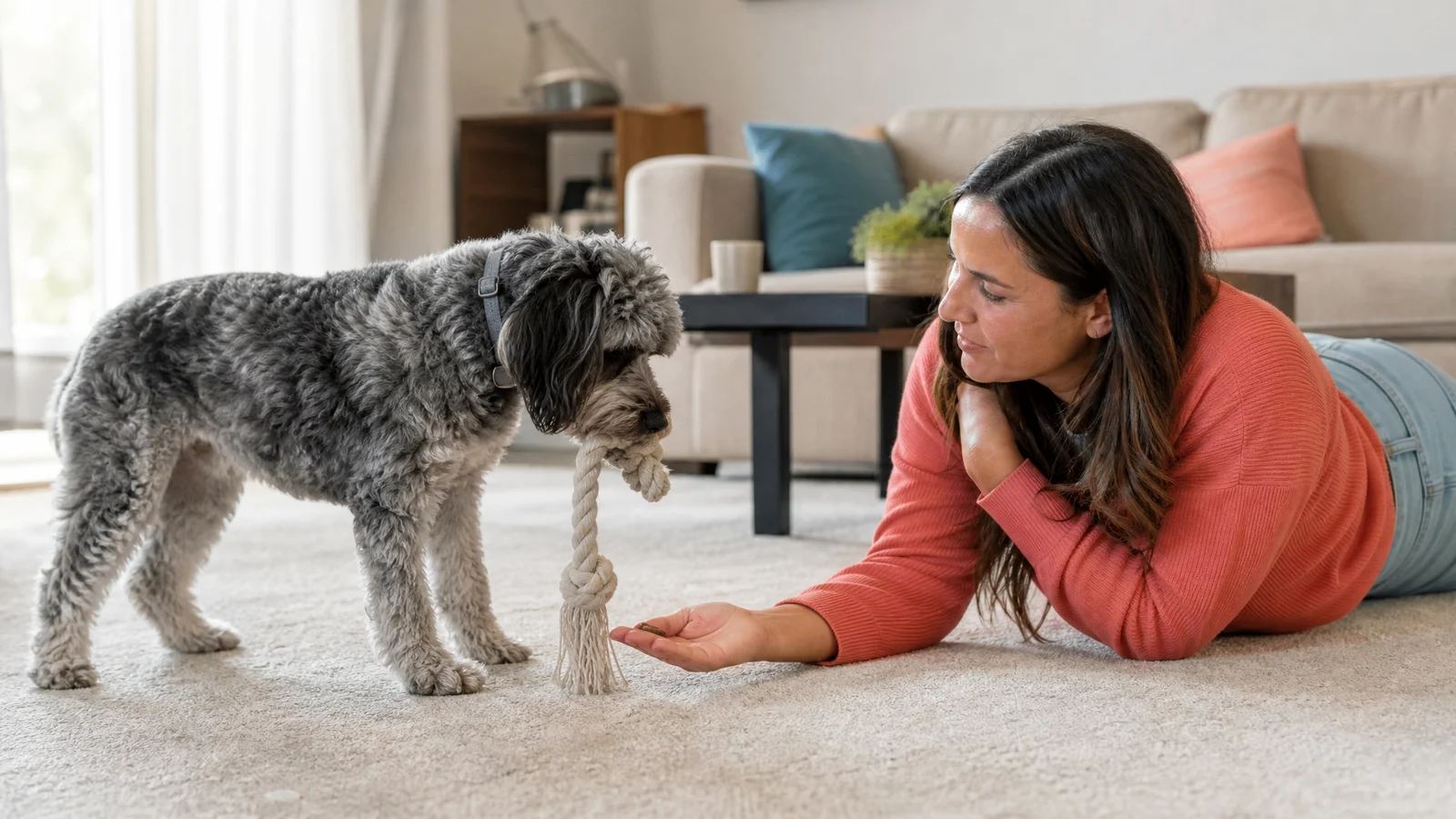
A comfortable release makes play easier to manage, but it should be learned separately from a fast chase. Choose an ordinary toy your dog can hold and leave without tension. If possession brings a stiff posture, hovering or a wary stare, pause practice and arrange appropriate help instead of reaching in to demonstrate the cue.
The Reward Gives a Reason to Let Go
Begin while your Cockapoo is relaxed and interested in a suitable reward. Let them leave the practice toy voluntarily, with enough space to move away before you collect it. Guidance on teaching a drop cue builds release through rewarding exchanges, rather than making retrieval depend on chasing the dog.
Keep the exchange easy. A treasured ball may be a poor first practice object even when it is the item you eventually want returned.
Use your chosen release word as the familiar action becomes predictable. Say it once, allow the response and reward the dog. Avoid repeating the word while pulling at the toy, since that changes both the physical interaction and the information the cue provides. Calm participation is more useful than obtaining the object at any cost.
Hands Arrive After the Release
Watch your hand movement as carefully as the dog's mouth. Reaching too soon can make your Cockapoo pick the toy up again before you have finished the exchange. Wait until they have moved away comfortably, then collect the abandoned item without leaning across the dog. Keep the collected item still while the dog takes the reward, rather than waving it around and starting another chase by accident.
Return a suitable toy during easy practice when appropriate. Releasing need not predict the permanent loss of every enjoyable possession.
For a dog who guards objects, use the separate Cockapoo toy guarding and trust guide and seek qualified support. A drop cue is a useful skill, but a successful release does not by itself show that the dog feels comfortable about the next approach or collection.
The Pause Before Another Retrieve
After a relaxed release, add a brief ordinary pause before any next play opportunity. Reward the dog for remaining available, then either resume modest play or finish clearly. This breaks up the automatic sequence in which the ball leaving the mouth must immediately produce another throw.
Keep that pause achievable. A dog staring intensely, bouncing or barking may need a quieter version of the game before waiting can become comfortable.
General guidance on rewarding useful behavior supports teaching the action you want to see again. Here, the useful response includes both releasing and being able to do something other than chase. Reward those skills in easy moments instead of demanding them only when excitement is already high.
Rebuilding Fetch at a Manageable Pace
Once the separate pieces are comfortable, reintroduce a modest retrieval in an appropriate space. Use a suitable toy, clear footing and a route free of obstacles. Choose a version your Cockapoo can perform without frantic acceleration or awkward turns, and be ready to finish before repeated chasing becomes the only available activity.
Advice on controlled chase and retrieve includes letting a thrown toy come to rest before sending the dog, once that waiting skill is established. The broader point is to keep control and thoughtful movement within play. More speed is not the only way to make a retrieval worthwhile.
- Begin with a quiet dog, an appropriate practice area and the resting arrangement already prepared.
- Offer an easy retrieve, then reward a comfortable return and release without rushing into the next repetition.
- Include an achievable pause or another familiar calm action before deciding whether more play suits the dog.
- Use the finish phrase and move into the prepared quiet activity while your Cockapoo can still participate comfortably.
Observe the transitions rather than counting throws as the measure of a successful game. Can the dog leave the play area, respond to familiar information and settle into the next activity? If those parts deteriorate, make the next game easier or choose a different activity. An enthusiastic chase does not answer those questions.
Keep regular veterinary visits in the routine and discuss unusual movement, persistent difficulty settling or a sudden change in play behavior. Ask for individual guidance about suitable activity when needed. A dog who remains intensely preoccupied with the ball outside play also deserves qualified behavior support, rather than an endless series of home experiments.
Include the setting after the last retrieve in your game design. Walking straight past other dogs chasing balls may make your quiet finish much harder. Choose an exit route with fewer invitations to restart, then give your Cockapoo time to follow the familiar transition without another exciting toy appearing.
When Cockapoo Fetch Fits the Rest of the Day
Look for a game with an understandable beginning, cooperative exchanges and a finish your dog can actually use. The ball can remain enjoyable without organizing every quiet moment around the next throw. Progress may first appear as less watching of storage places or an easier transition to another activity.
Keep the arrangement flexible. A Cockapoo who manages a modest game on one day may need quieter choices after an exciting outing or disrupted rest. Judge the next session by their current response, keeping the trained finish available before deciding how much play to offer.
 BehaviorWhy Is My Cockapoo Barking for Attention? Quiet Ways to Ask
 BehaviorA Cockapoo Who Guards Toys Can Learn a Happy Trade
 BehaviorStolen Socks and Chewed Shoes: Redirecting Your Cockapoo