 Cockapoo
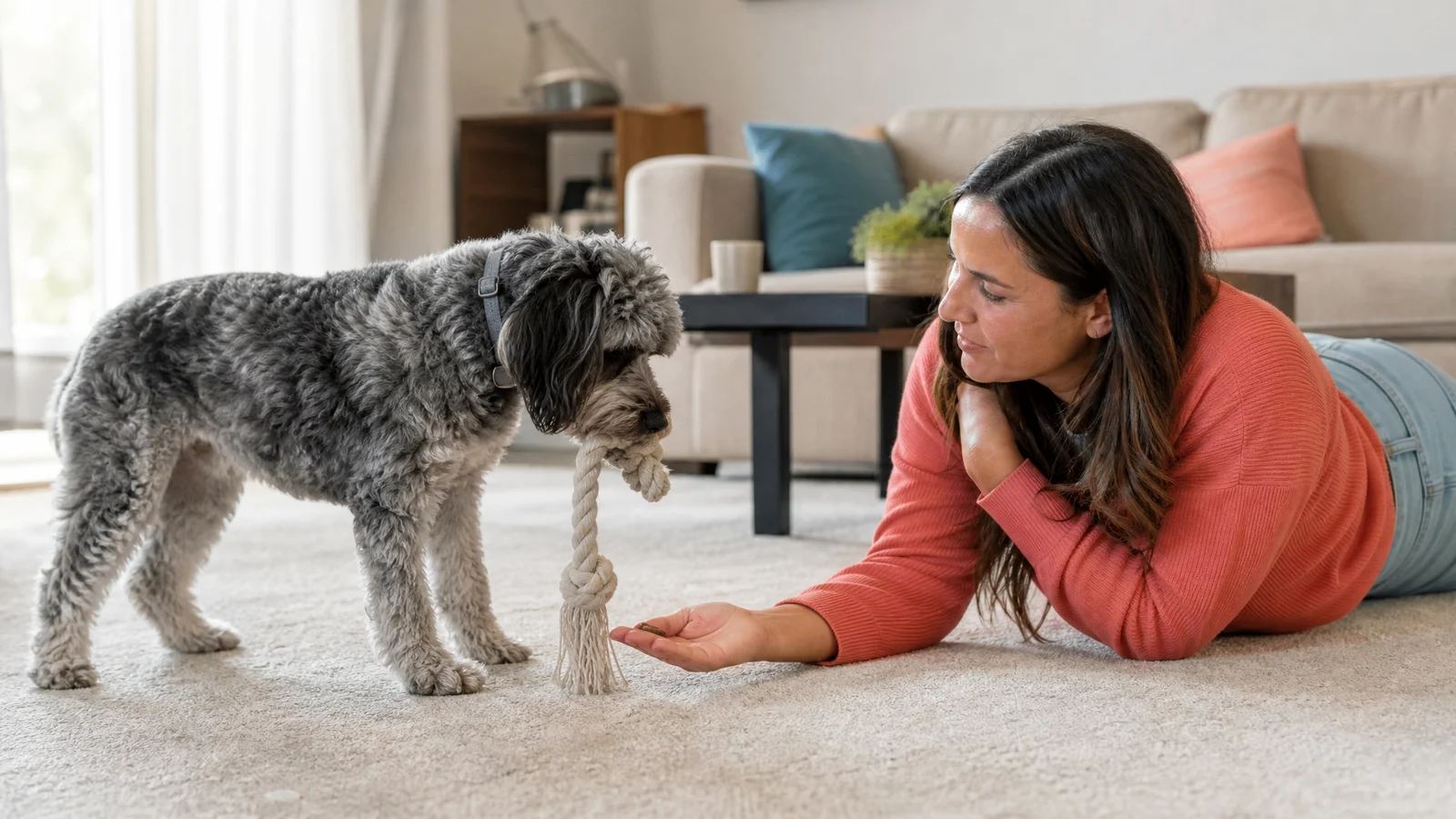
A Cockapoo can let go of a toy and still worry about the person collecting it. The release tells you where the object ended up, but the dog's posture afterward tells you more about the experience. Looking for both prevents a successful retrieval from hiding an uncomfortable interaction.
A useful trade should make cooperation worthwhile without requiring the dog to tolerate a frightening reach. If they already freeze, hover over a possession or threaten an approach, give space and obtain qualified help. Choose ordinary practice toys only when your Cockapoo can handle and leave them without tension.
This guide examines the questions that remain when a trade does not feel happy: why food stops working, why hands change the response, why a dog rushes back and why another person gets a different result. We use those observations to choose safer, clearer practice and more predictable possession between exchanges.
A Cockapoo Drops the Toy but Still Looks Worried
Watch what happens after the mouth opens. A dog who stands stiffly beside the object, tracks your hand or immediately covers the toy again may not be comfortable with collection. The trained action can occur without resolving the concern underneath it. Stop approaching instead of treating the release as permission to continue.
Guidance on the canine ladder of communication explains the value of noticing early signals. You do not need to wait for a growl or snap before responding. Give your Cockapoo room, keep children and other animals away, and discuss repeated or worrying behavior with an appropriate professional.
Quiet is not the same as relaxed. Look for comfortable movement and willing participation throughout the encounter, including after the person stops offering food.
Keep regular veterinary checkups part of care and mention a sudden change around possessions, particularly if handling or movement also looks different. The dog's usual friendliness does not answer every question about a specific toy. Bring observations about the object, the approaching person and the response, without repeatedly recreating an uncomfortable incident to collect more evidence.
Toy Guarding When Food Loses Its Appeal
A reward that works in an easy exchange may be less useful with a valued toy or in a busy setting. That does not establish that your Cockapoo has decided to ignore the cue. Look at what changed before increasing the demand, and keep active guarding separate from ordinary practice of a release skill.
The Object Changed the Question
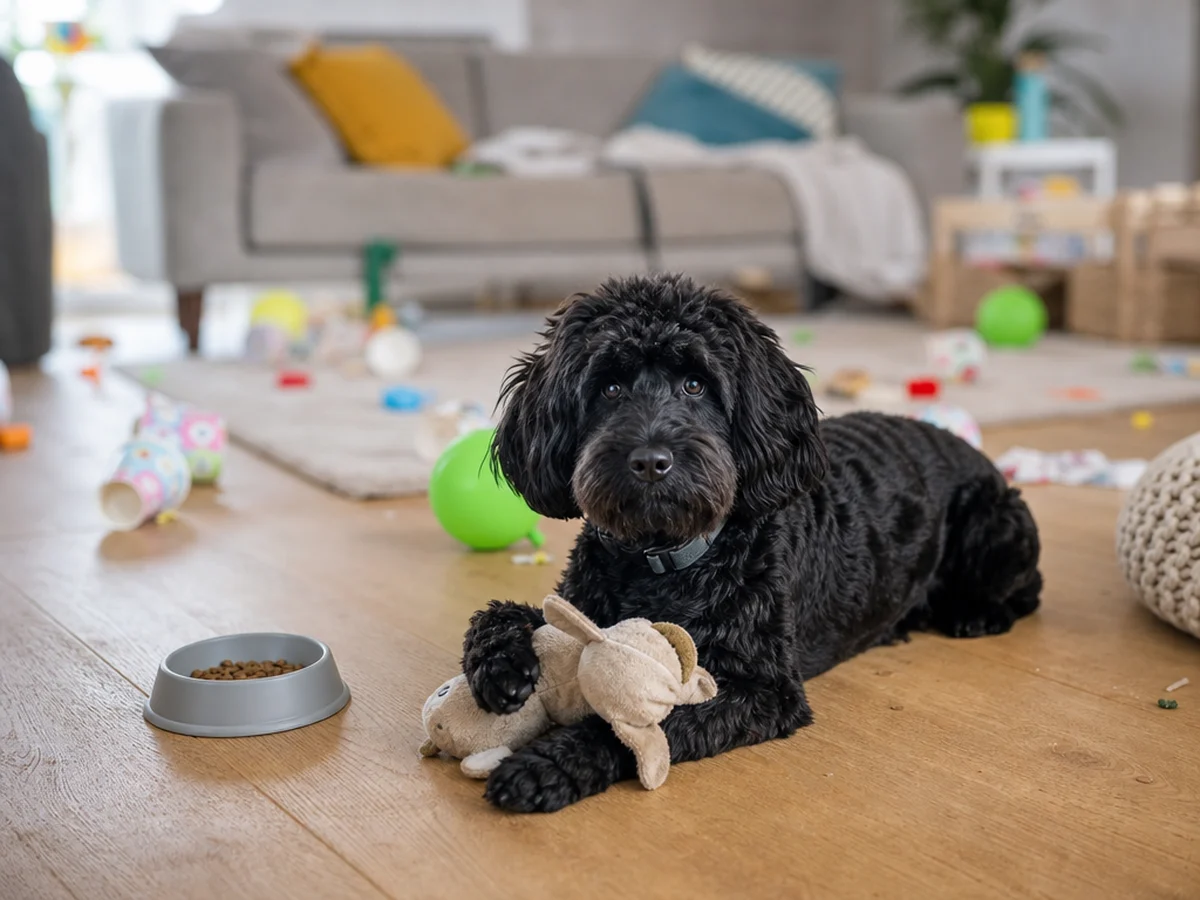
Practice with an ordinary toy the dog can leave comfortably. Moving straight to a favorite possession changes the value of what is being given up, even if the person uses the same cue and food. A successful exchange with one object is evidence about that object and setting, not a general permission to collect everything.
Choose the easier object again when needed. Confidence can develop without testing the most difficult possession at every session.
Advice on rewarded give and trade skills connects giving something up with a useful outcome. Select a reward your dog values in the current easy setting, then allow a voluntary move away. Food should support cooperation, rather than distract the dog just long enough for a hurried collection beside their mouth.
The Setting Changed the Value
Another dog approaching, children moving nearby or a person leaning over the toy can change the encounter. More appealing food does not remove those conditions. Arrange a quiet adult-managed space before practice, where your Cockapoo can move freely and nobody needs to cross the interaction to use the room. A room that stays quiet only until someone needs a doorway may need a different arrangement before the lesson can begin.
A Cockapoo may enjoy food, play and contact in different combinations. Observe what matters to this dog instead of assuming a cross with sociable parents will always prefer a person's offer to independent toy time.
If the dog will not participate comfortably in a simple setup, stop increasing the challenge. A qualified reward-based behavior professional can assess what the object and approach predict. Their help is especially important when the concern extends across possessions or the household cannot maintain safe separation around valued items.
Toy Guarding When Hands Move Too Soon
Sometimes the difficult moment begins after an apparently willing release. The person reaches immediately, and the dog picks the toy up again or becomes still. Look at that hand movement as part of the interaction. Opening the mouth and accepting a nearby hand are separate experiences, even when a person thinks of them as one exchange.
Use the following sequence only with a relaxed dog and a suitable practice object. A dog already guarding needs space and an individualized plan, not another attempt at the same reach.
- Offer a worthwhile reward in a position that lets the dog leave the toy voluntarily, without crowding their face or blocking their route.
- Wait until your Cockapoo has comfortably moved away from the object before considering collection.
- Pick up the abandoned toy without reaching across the dog, keeping the movement ordinary and unhurried.
- Return a safe toy when appropriate or provide a suitable next activity, giving the exchange a clear finish.
Once that easy action is predictable, a short cue can accompany it. Keep the wording consistent and reward the response, while continuing to watch the dog's comfort. Repeating the word does not make an uncertain reach easier. If your Cockapoo returns to cover the object as you move, pause and obtain guidance before progressing.
Prepare the destination for the toy beforehand. An adult who collects it and then walks around looking for storage can keep the dog following their hand. Having a clear place for either storage or return makes the interaction easier to finish, and it gives another caregiver a practical routine they can understand.
A Cockapoo Who Hurries Back to the Toy
A dog may leave for food and then rush to reclaim possession. Ask what they expected to happen while away. If collections usually remove the item for good, a quick return may be part of protecting access. Treat the response as information, without assuming that eating the reward proved the exchange was reassuring.
When the toy is safe to return, set it down where the dog can choose to approach without passing close to you. Then allow space. Hovering to inspect their reaction can recreate the very approach that made the earlier interaction difficult, leaving you with little chance to observe ordinary play.
Compare the quality of the return. Loose movement and comfortable play tell a different story from covering the toy or watching every shift of your hands.
Guidance on guarding valued resources cautions against repeatedly removing possessions as a test. Reduce unnecessary collections between lessons. Your Cockapoo can learn that safe toy time often continues undisturbed, while you arrange suitable practice with objects that do not produce a worrying response.
If an item is damaged or unsuitable, it cannot become the reward simply to preserve the routine. After safe retrieval, put it away and provide an appropriate alternative. The Cockapoo belongings and chewing guide explains how storage reduces repeated urgent exchanges over things the dog should not have reached.
Toy Guarding Around Children and Other Dogs
People and pets can change the value of possession by approaching it. A relaxed exchange with one adult does not establish that toys can be shared freely with a child or another dog. Keep those situations separate in your plan, making the physical arrangement do more of the work before a valuable item appears.
Children should get an adult when a dog has taken something. They should not offer trades, pursue the dog or try to test whether a quiet expression means collection is safe.
| Shared Situation | Adult Management |
|---|---|
| A child needs a toy back | Keep the child away and arrange safe retrieval with appropriate help |
| Another dog approaches possession | Use separate suitable spaces before offering valued toys |
| People must pass a resting dog | Choose a play location outside the traffic route |
The Cockapoo family interaction guide covers broader household boundaries. Here, the important agreement is about undisturbed possession. Adults can inspect and organize toys when the dog is elsewhere, avoiding a routine in which every cleanup requires reaching beside a dog who is actively enjoying an object.
For a dangerous item or possible swallowing, contact your veterinarian promptly for guidance and protect people from an unsafe reach. Do not treat an emergency as a test of the exchange cue. Once the immediate concern is addressed, review access and arrange a safer response plan with appropriate professional support.
Why Cockapoo Toy Guarding Returns With Another Adult
Dogs experience the person as well as the word. An adult may stand closer, move faster or deliver the reward in a different place, changing an exchange that looked easy with someone else. Begin with an ordinary object in a familiar setting, and let the dog's response determine whether the new version is appropriate.
Agree on Movement as Well as Words
Show the adult where to stand and where the dog can move. Explain that collection follows a comfortable departure, not merely a brief glance toward food. A shared cue is useful, but shared timing and respect for space make the practical experience more consistent. Demonstrating the human movements without a dog first can make those expectations clearer before the adult joins an actual exchange.
Stop when participation becomes tense. The adult can learn the routine without demonstrating it on a difficult possession.
A Different Room Deserves an Easier Start
Consider the available exit and resting space in the new location. Furniture that confines the dog or a doorway used by other people can make an approach harder to tolerate. Use an easier object and familiar reward while assessing the room, keeping the path between possession and reward open.
Do not combine a new adult, room and valued toy into one test. Changing one feature gives you a clearer explanation when the response changes.
Record the Moment That Became Difficult
Note whether concern began at the approach, the offer, the hand movement or the return of the toy. Those are different questions for the professional helping you. A short description of the actual moment is more useful than a count of successful collections that leaves the dog's comfort out.
Keep records without staging more uncomfortable incidents. Existing observations can guide the next safer arrangement and help you decide what support is needed.
Calmer Toy Possession Between Cockapoo Exchanges
A happy trade develops within a household that gives possession a predictable place. Keep suitable toys available for undisturbed enjoyment, make necessary collections comfortable where possible and avoid testing difficult situations merely to see whether the cue will hold. Willing release and relaxed behavior afterward both belong in your measure of progress.
Continue with qualified support when guarding persists or creates risk. There is no useful deadline for making every object shareable. Your Cockapoo's response to the whole encounter, including what happens between exchanges, should guide how the plan changes.
 BehaviorStolen Socks and Chewed Shoes: Redirecting Your Cockapoo
 Puppy trainingHow to Build a Potty Schedule for a Cockapoo Puppy's Small Bladder
 Training basicsAre Cockapoos Easy to Train? Read the Individual Dog