 Cockapoo
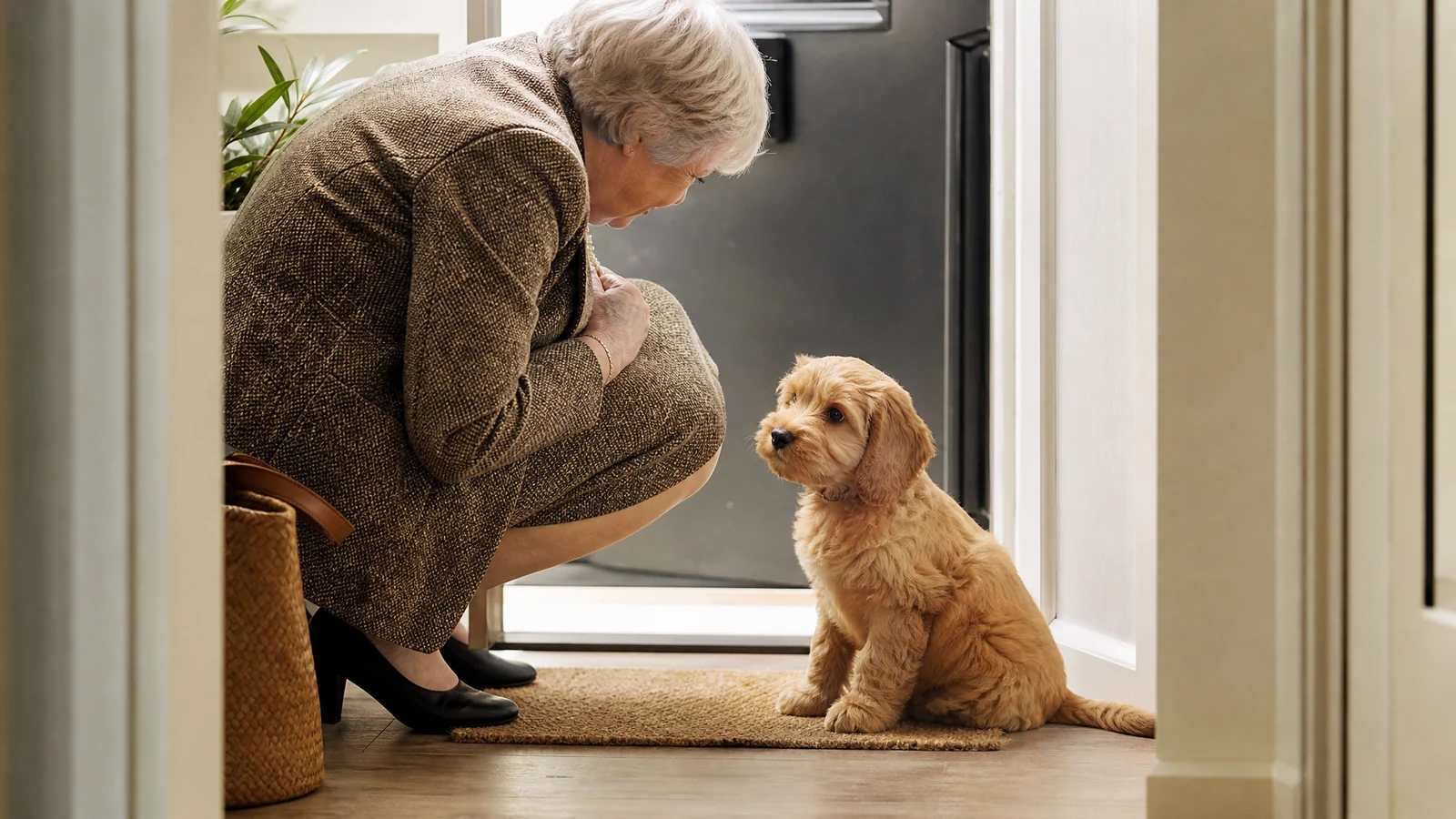
Most of the timing question comes down to the first few months. A Cockapoo puppy's earliest weeks are when people, sounds and other dogs leave their deepest impression, adolescence is when polite habits get tested, and a calmer adult arrives gradually afterward.
Friendliness does not remove that deadline. Both parent breeds score high for openness to strangers, so shyness is rarely the issue. Overexcited greetings are, and they harden into habit when nobody shapes them.
This article looks at socializing through five household situations, so you can match your own and leave with a stage-by-stage plan. It covers hallway greetings in an apartment, supervising young children, adding a puppy to a resident dog, fitting short outings around a workday, and teaching an adolescent who loves everyone to keep their paws on the floor. Ask your veterinarian when your puppy is protected enough for public spaces before you start.
Socializing a Cockapoo Puppy in a Hallway-Heavy Apartment
An elevator door slides open, a neighbor with a stroller steps out, and your puppy hits the end of the leash in a wriggling bid to say hello. Apartment life delivers dozens of these tiny meetings a day in tight spaces, which is both the challenge and the opportunity. Every doorway is a rehearsal, and whatever gets rewarded in the corridor becomes the greeting your dog uses everywhere else.
Treat the building as a training course. Choose one spot, such as beside your front door or at the elevator, and teach a sit on a mat-sized patch of floor. Pay for calm before the door opens, not after the chaos starts. Both parent breeds rate high for trainability, so small treats and a cheerful marker word go a long way.
Greeting Neighbors in Tight Spaces
Ask neighbors to wait until your puppy has settled before they say hello. The same principle of greeting calmly once settled is used to limit excited peeing, and it works for jumping too. Visitors who ignore a bouncing puppy for a few seconds teach more than visitors who coo at them.
Noise and Pacing
Sound is the second hallway issue. The Poodle side scores higher for barking than the Cocker side, and a corridor full of footsteps, delivery carts and slamming doors gives a dog plenty to announce. Reward quiet noticing early, before barking becomes a habit. Both parents score well for adaptability, so many Cockapoos take new settings in stride when exposure is gradual.
The cost of overdoing it is a puppy who gets too much, too fast. If treats stop being interesting, or your dog stiffens or tucks in behind your legs, take the stairs for a while or wait for a quieter hour. Short, calm repetitions beat a crowded lobby every time.
Socializing Young Children and a Cockapoo at Home
Toddlers move unpredictably, drop snacks and squeal, and a Cockapoo at floor level treats all of it as an invitation. Both parent breeds receive the top rating for being good with young children, so the starting point is encouraging. The problems owners report are not aggression. They are jumping up, mouthing during play and a dog so excited that nobody can be gentle.
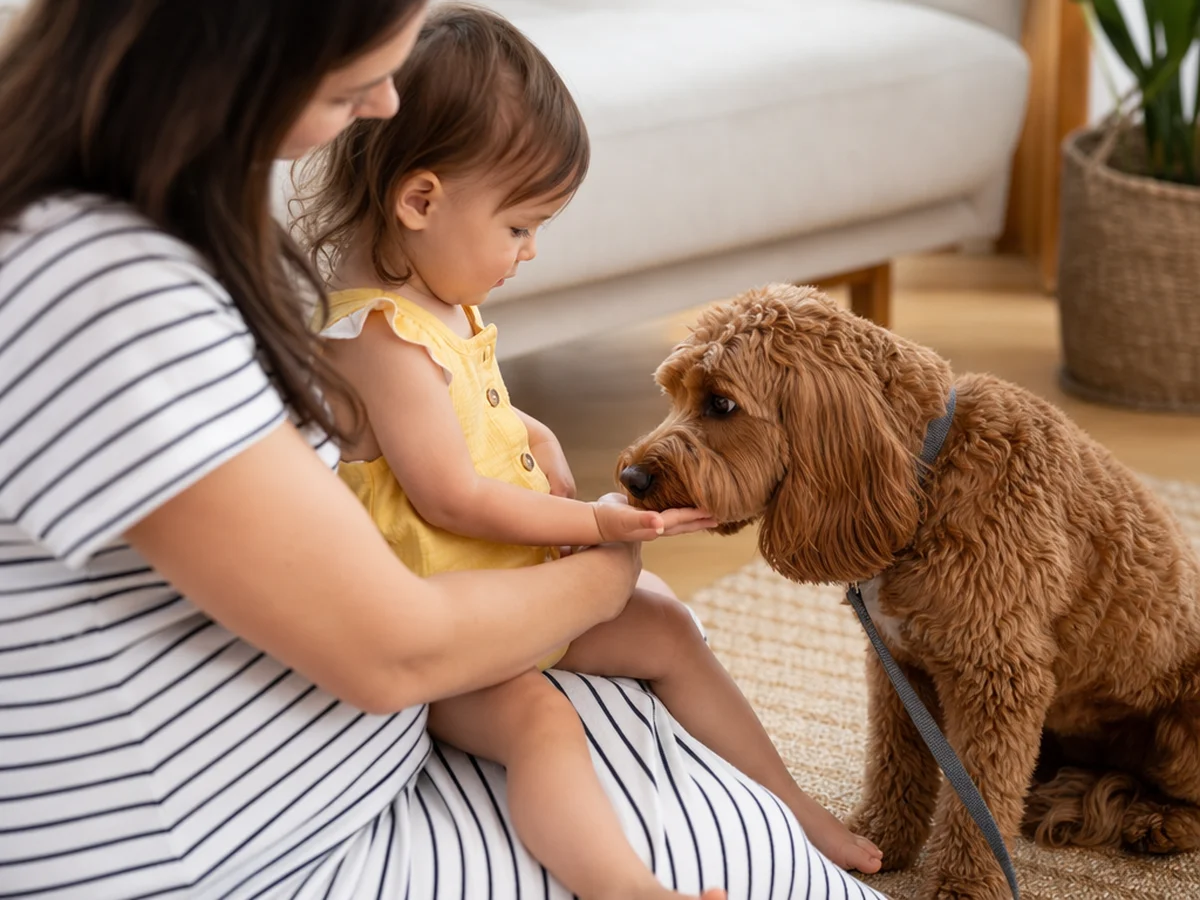
Read those ratings as a reason to put effort in, not a reason to relax. Individual dogs vary, and playfulness scores higher in the Poodle than in the Cocker, so some Cockapoos bring far more bounce than a small child can manage. Plan on supervision, and let the dog's learning and the child's learning move together.
- An adult stays within arm's reach and fully attentive during every interaction, not just somewhere in the house.
- Have children settle on the floor and wait for the puppy to come to them, since a child who stays seated is much less exciting than one who runs.
- Kids pet along the shoulder or chest and give the dog peace during meals, chew time and naps.
- A child drops or tosses a treat so the dog links children with good things without any grabbing.
- Sessions finish while everyone is still happy, well before the puppy gets wound up or tired.
- A gate, pen or crate gives the dog a retreat that no child may enter.
If mouthing starts, stop the game right away. Stand up or move to the other side of a baby gate for a quick pause, and pick the game back up once the puppy has calmed down. A pause like this is a mild consequence that sits comfortably alongside rewards, and it is all you need. The reward-based training idea is simple: give the dog something they love for the behavior you want, and they offer it more often.
Think in stages. In the early months your job is to prevent practice of the wrong habits. Through adolescence you are building reliability. Many owners find their Cockapoo becomes much calmer as they mature, yet lively moments still return now and then, so keep paying for settling near the kids long after it seems unnecessary.
Socializing a Newcomer in a Two-Dog House
A resident dog who has enjoyed a quiet sofa for years can find a bouncing puppy exhausting, however friendly both are. The parent breeds disagree about other dogs. The Cocker gets the top rating for being good with other dogs, while the Poodle sits in the middle, at "with supervision." A Cockapoo can land anywhere along that range, so supervise first and relax only when the evidence supports it.
Begin with the older dog's comfort, because their patience is the budget you are spending. Give them a gated space the puppy cannot enter and keep their favorite resting spots off limits to the newcomer. Introduce the pair on neutral ground, walking side by side but well apart, then narrow the gap over several outings. Keep the first sniff brief, call the puppy away and reward.
Reading Play at Home
Healthy play looks loose and bouncy, with role swaps and pauses. If the puppy keeps chasing a dog who is trying to leave, or the older dog is cornered, pause the game and let the puppy cool off in another room. Puppies who never meet a calm interruption learn that pestering works.
The Cost of Rushing
Hurrying risks a resident dog who learns to snap at or avoid the puppy, a pattern that takes much longer to undo than a slow introduction takes to complete. Give each dog separate one-on-one time and their own rewards, so neither sees the other as a thief of attention. Your puppy also needs experiences with dogs beyond the one at home, so add a few well-mannered, vaccinated outside dogs once your vet agrees.
This is general information, not medical advice. Check with your veterinarian about vaccination timing and when your puppy can safely meet other dogs, and keep regular vet visits on the calendar, since discomfort can change behavior.
Socializing a Cockapoo When the Owner Works All Day
A puppy left for a long stretch will not be socialized by the house. Experiences have to be scheduled, and owners who leave early and return late often find all the learning crammed into the evening, when the dog is overtired and overexcited. A handful of short, deliberate outings spread through the week works better than one big session.
Plan around your own dog, not an average. Cockapoos differ a lot in how they handle being alone. Many owners report a young puppy resting calmly in a crate for about an hour, while others describe distress severe enough to leave them feeling housebound. Some who call it separation anxiety later decide their own worry was part of the picture, so watch what your dog actually does before deciding how much help you need.
Expect some clinginess even if someone is usually home. Mild howling when left, or whining when ignored too long, tends to be an attention-seeking habit that improves with time. Short, rewarded practice of calm alone time helps. Some dogs accept the crate well and still need an owner nearby at night for roughly the first month, then gradually further away. That is a normal, temporary step.
Then build a weekly rhythm that fits your schedule:
- A short morning walk where you reward calm looks at passing people.
- A midday visit from a walker or friend who follows your greeting rules.
- One planned meeting each evening, such as a calm neighbor, a friendly dog or a quiet cafe patio.
- A longer weekend outing to a new place, ended while the dog is still happy.
The trade-off is stored energy. Poodles are very active and need real daily exercise, and a Cockapoo may inherit that. The more you provide before you leave, the easier the day is for everyone.
Calming an Over-Friendly Cockapoo on Neighborhood Walks
By adolescence, a Cockapoo who loves everyone can turn a simple walk into a series of lunges toward every stranger and every dog on the sidewalk. They are not aggressive. They are overjoyed, and they have learned that pulling hard gets them there. Because both parents rate so high for openness to strangers, excited greetings are a likely training focus for many Cockapoo owners.
The fix is making polite behavior the thing that opens the door to the greeting. Greeting practice with a helper is the cleanest way to teach it. If the dog rises from their sit as the helper approaches, the helper turns and walks away at once, so staying seated is what brings the person closer.
- Start with a familiar helper far enough off that treats still matter to your dog.
- Ask for a sit and reward it while the helper walks in.
- If your dog stays down, the helper arrives and offers a brief, low pet.
- If your dog pops up, the helper turns away and you retry from farther back.
- Repeat with strangers, then with dogs, always shrinking the gap slowly.
On the street, you are allowed to decline greetings. Many dogs learn faster when most passersby are simply scenery and only a few meetings are permitted. Reward your dog for glancing at a person or dog and then back at you, which builds a dog who chooses calm without being asked.
Expect progress in waves. Many owners report their Cockapoo calmed down substantially by around a year old, yet occasional lively or difficult moments still happen. Calm is a trend, not a switch, so keep rewarding settling and keep outlets for energy available.
Questions Cockapoo Owners Ask Next About Socializing
Once basic greetings are working, owners tend to ask the same few things, and each has a home on the site.
- Is howling or whining when you leave the same as separation anxiety? Often it is mild attention seeking, though some dogs struggle more. Our guide to calm time alone in the crate walks through the steps.
- Why do mouthing, barking and mischief continue after all this practice? Those habits often trace back to the parent breeds' instincts, covered in our piece on common Cockapoo behavior problems.
- Is reward-based work enough for a pushy, excitable dog? Yes. The veterinary behaviorists' position is that rewards alone should guide every kind of dog training, behavior problems included.
Across every household the pattern is the same. A Cockapoo's friendliness is the asset, and the work is teaching it to arrive calmly. Start early, move in small steps, reward the pause before the greeting and keep it going through adolescence. A dog who learns that calm gets them everything they want makes a delightful neighbor, a safe companion for children and a steady friend to other dogs.
 CareHow to Groom a Cockapoo at Home: Calm Brushing With Treats
 Training basicsRecall for a Cockapoo Who Follows Their Nose
 BehaviorBalancing Fetch and Calm for a Ball-Obsessed Cockapoo