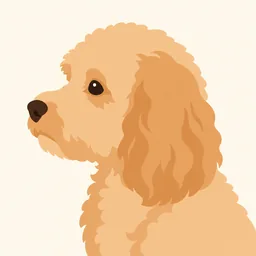
 Cockapoo
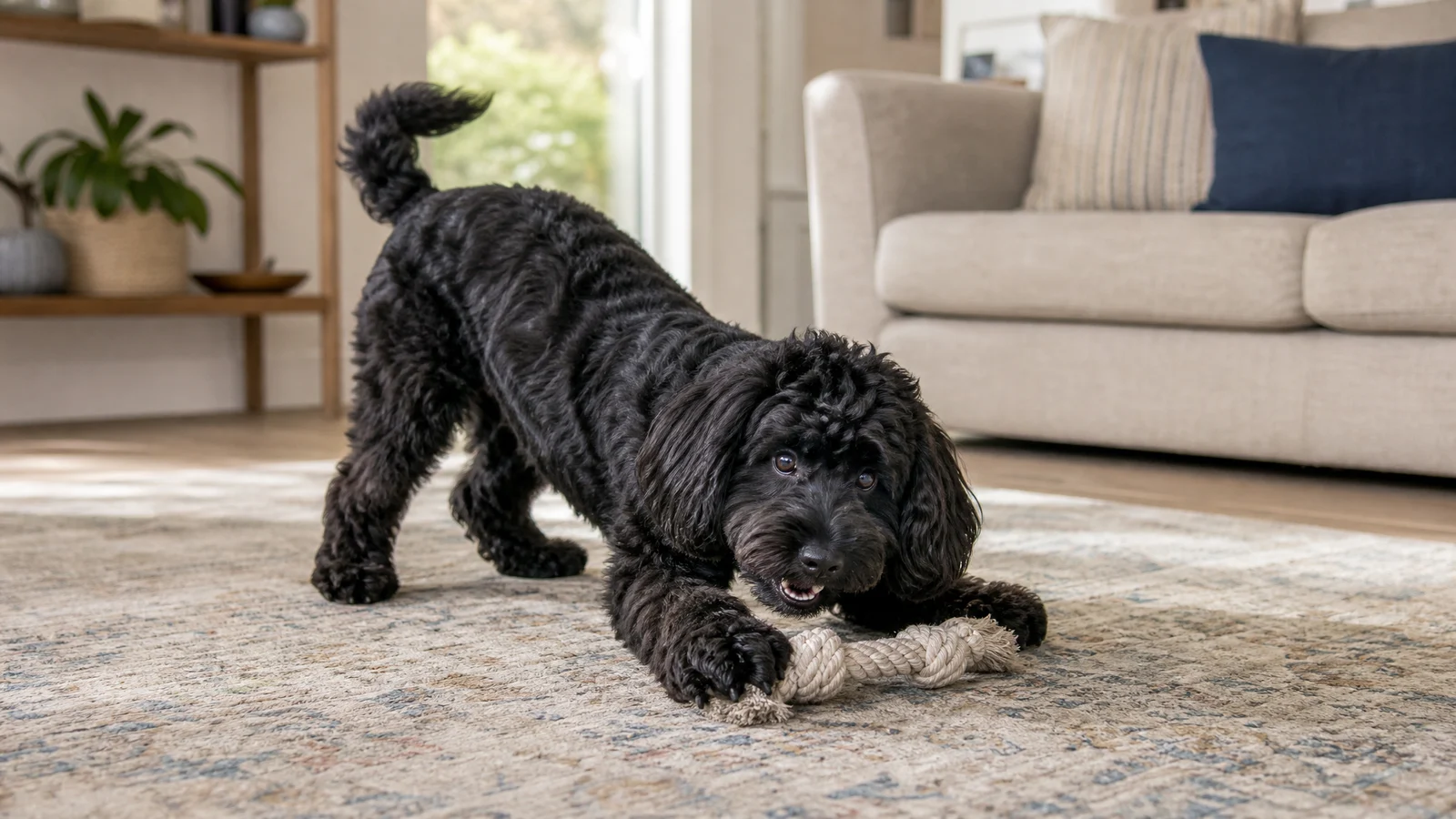
A happy seven-month-old Cockapoo trots through the door, lunges at your ankles, and an hour later growls when you reach for a dropped toy. Plenty of owners know this exact scene, and the first fear is always the same: did something go wrong? Usually nothing did. This is adolescence, not a ruined dog.
We specialize in Cockapoo behavior and training, and the pattern we know best is that this age looks scarier than it is. Many owners describe barking, pestering and demands for attention far more than true aggression. Handled badly, though, these months can teach a worried dog that biting works. Handled well, they lead to a much calmer adult.
In this article, we'll go through how to tell play-biting from real aggression, the chews, rewards, gear and rest spaces that replace biting, and the signs that say keep going or call a professional.
Adolescent Biting and Aggression in a Cockapoo
Two definitions help before anything else. Mouthing is using the teeth and jaws to explore, play or ask for attention, with little pressure behind it. Aggression is behavior meant to make a person or dog back off, such as a stiff freeze, a hard stare, a lip lift, a snap or a bite that is not part of play. A young dog's mouth works like hands, so a teenager who cannot yet manage their own strength grabs with the only tool they have.
The parent breeds explain why Cockapoos are so mouthy and bouncy at this age. The Poodle rates 5 of 5 for playfulness, and both the Poodle and the Cocker Spaniel rate 4 of 5 for energy. The Cocker side was developed to find birds and carry them back, so a cross may inherit a streak of wanting something in their mouth. Playful, energetic and mouthy together add up to a lot of nipping whenever the dog is excited.
Normal Teenage Mouthing
Many owners find that the stretch around 5 to 8 months brings less true biting than pestering. The dog barks for attention, grabs sleeves, demands play and generally stirs things up. Play-biting has a recognizable look:
- The body is loose and wiggly, often with play bows, bouncy movements and a relaxed face.
- Mouthing comes in bursts, and the dog pauses or switches games when you stop playing.
- It shows up when the dog is excited, bored or overtired, and it is mostly aimed at ankles, sleeves and hands.
- The dog is back to friendly within moments once the game ends.
When It Is True Aggression
True aggression looks different. The body goes stiff or very still, the stare hardens, and the growl or snap arrives with no play signals at all. Fear is a common driver. A fearful dog normally retreats, but a dog who may become aggressive if cornered or trapped will use their teeth when there is no way out. That is why the gear and rest spaces below matter so much.
A growl over a toy sits in between. Read it as information, not a verdict. It tells you the dog is worried about losing something, and the fix is teaching that handing things over pays well, which we cover next. If the growl comes with stiffness and a hard stare, jump ahead to the final section.
Chew Items and Tug Toys That Redirect Cockapoo Mouthing
The fastest way to cut biting is to give the mouth a legal job. A teenager with a strong urge to chew will use whatever is closest, and the closest thing is usually your hand. Keep a small basket of chews in every room where you spend time, so you can offer one the moment teeth find skin. Rotating the basket keeps old items feeling new.
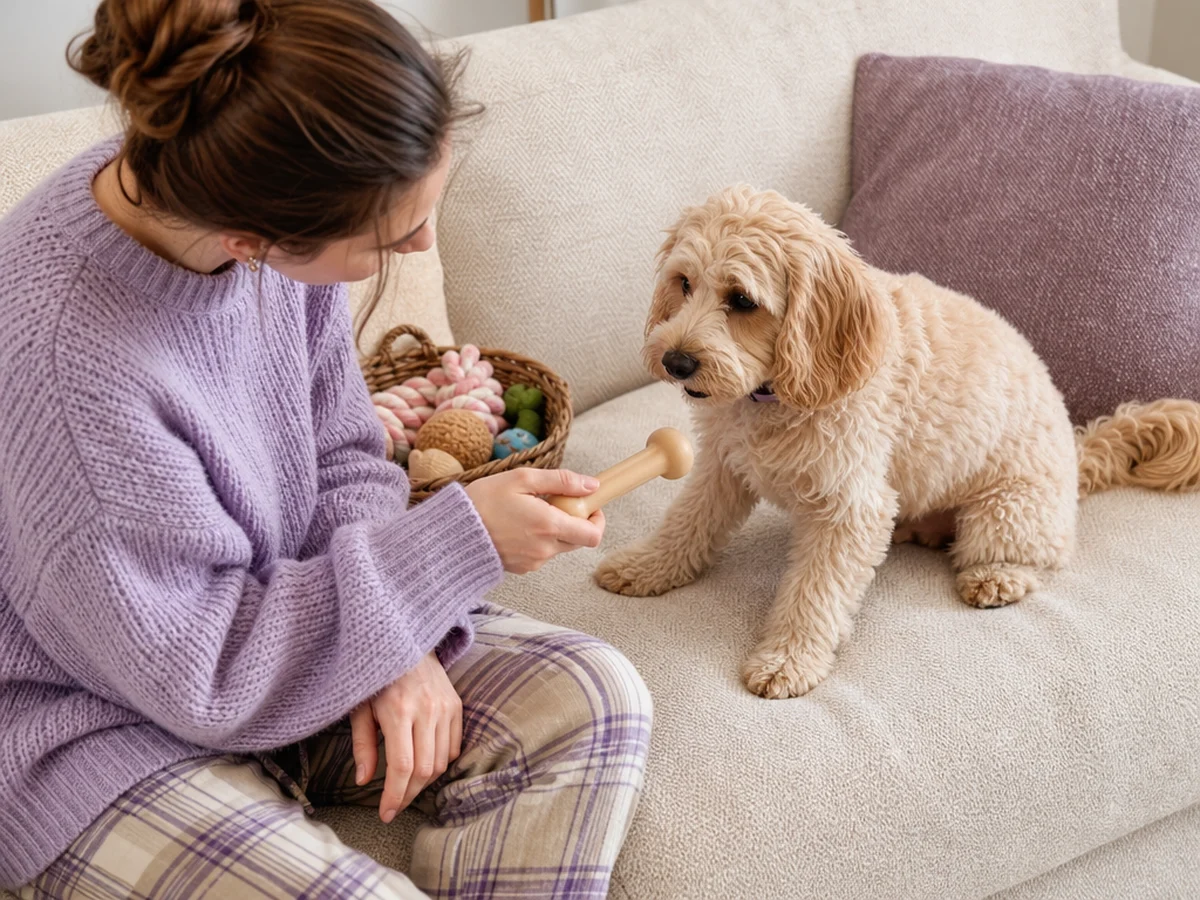
- Sturdy rubber chews suit long chewing sessions and can be stuffed with a little food to hold attention.
- Soft fabric or rope toys work for gentle carrying and mouthing, but supervise them and retire any that start to fray.
- Tug toys with a long handle keep your hands well away from the teeth.
- A lasting chew kept for crate or mat time helps an excited dog wind down.
Tug is an excellent outlet for a playful, people-loving dog, provided it has rules. You start the game, you end the game, and the game stops at once if teeth touch skin. Stopping play is a mild, fair consequence, and the dog quickly learns that gentle mouths keep the fun going. Ask your veterinarian which chew types suit your dog's size and teeth.
The swap matters as much as the toy. When you feel teeth, freeze, put the toy in front of the dog and wiggle it, so the mouth has a better target than your skin. Praise the moment they take it. Over a few weeks, many dogs start grabbing a toy on their own when they get excited, which is exactly the habit you want.
Pair the toys with a trade game, which teaches that letting go is a good deal.
While your dog holds a toy, bring a treat to their nose, and as soon as the jaws open, mark it with your chosen word and give the treat. Then hand the toy straight back, so releasing it pays twice.
Repeat the game often, slowly trading for items the dog values more, so guarding never has a reason to start.
Toys are only part of the answer for a bright, busy dog, and Cockapoo jobs and brain games give the mouth and mind even more to do.
Rewards That Teach Cockapoo Calm Over Aggression
A reward is anything your dog wants that arrives right after a behavior, and behavior that gets paid for happens more often. That is the core of reward-based training, and Cockapoos make it easy. Poodles learn eagerly when sessions are enjoyable and consistent, and Cockers are easily motivated by food, play and praise. You have three currencies to spend, and you can mix them.
Timing is the skill. Choose a marker word, a brief sound like "yes", that tells the dog that exact moment earned the reward. Say it, then deliver the treat. Then pay for the calm you want, not the storm you got: four paws on the floor, a closed mouth, a pause after an excited burst. Reward those moments often, in small amounts, so the dog learns that quiet is where the good stuff lives.
Match the prize to the difficulty. Plain kibble can pay for easy moments at home, while a tastier treat belongs to harder ones, such as staying calm when a guest walks in. If your dog turns down treats, they are probably too excited, so move farther from the trigger until eating feels easy again.
Life Rewards and Better Asks
Life rewards count too. The door opens when the dog sits, the leash clips on when they are calm, and the toy flies when the mouth stays soft. For the pestering many owners see at this age, give the demanding behavior nothing and reward a better ask, such as a sit or a toy brought to you. Some dogs get more wound up by a squeal of "ow," so turn quietly away or give a few minutes of calm in a safe space instead.
Build a settle on a mat the same way. Reward the first step onto it, next lying down, and then staying down a little longer each round. A dog who knows how to settle has a ready answer to the question of what to do with all that energy.
Gear That Prevents Bites and Aggression
Gear is about management, which means arranging the world so the unwanted behavior never gets practiced. Every nip that lands is a rehearsal, so while your teaching builds, equipment does the protecting. This matters for a Cockapoo because both parent breeds are energetic, and the Poodle side is rated as playful as a dog can be.
A lively adolescent may turn any burst of excitement into a mouthy game, especially with the people they adore. None of these tools is a punishment, and each works best when paired with treats so the dog likes using it.
- A leash and a well-fitted harness keep walks safe when the dog lunges at passersby or ankles. Reward every moment the leash is loose and move away from triggers before the dog gets wound up.
- Baby gates split the house so the dog can be near the family without reaching guests, children or the kitchen. Feed a treat through the gate for calm behavior.
- An exercise pen gives a safe parking spot with a chew while visitors arrive or dinner is made, so the dog never practices grabbing pant legs.
- A crate with the door open can be a quiet retreat, and a few minutes inside with a chew helps a wound-up dog settle.
Use these before trouble starts, not after. If the dog is already biting, calmly walk them to the pen or crate with a chew, let them settle, then return to normal life without fuss. Think of it as a reset, not a sentence. Introduce each piece on a calm day, tossing treats in so the dog walks in willingly, because gear that only appears during trouble starts to feel like trouble.
Rest Spaces That Defuse Overtired Cockapoo Snapping
Adolescent dogs often get wound up rather than sleepy when they are overtired. Tiredness comes out as frantic energy, grabbing and snapping, much like a child who gets sillier and sillier past bedtime. Overtired dogs often nip more, so watch for tiredness late in the day and after a big social event. A quiet space where the dog can drop off lets them reset before the snapping starts.
Set the space up in a calm corner away from foot traffic and children. A crate with a cover over part of it, or a mat in a quiet room, both work. Add comfortable bedding and a lasting chew. Teach the dog to love it by tossing treats in and letting them leave freely at first, so the space always feels like their choice.
Learn the signs that a nap is overdue, such as sudden zoomies, mouthy grabbing, and being unable to settle even with toys. Guide the dog in before the meltdown arrives, not in the middle of it. Make the space off limits to children and visitors, since a tired dog who is reached for in their bed may snap. Good rest also supports every other lesson in this article.
Daily Routines That Spend a Cockapoo's Energy
A tired, satisfied dog has little reason to bite. The Poodle side is an active dog who needs good exercise every day, and rates 5 of 5 for mental stimulation needs. The Cocker side needs less running but should keep good muscle tone. Because your dog may inherit either mix, watch their behavior and adjust. A dog who is pestering in the evening probably needs more brain work or more sleep.
A simple rhythm helps, and it repeats from day to day:
- Start with a walk where the dog can sniff, followed by a short training session using their favorite treats.
- Give a lasting chew or a food puzzle, then a long rest in the quiet space.
- Midday, play a controlled game of tug or a trick session, with the rules you have set.
- Offer another rest, then an evening walk or a calm play session, finishing with a chew and a settle on the mat.
Mix body and brain. A hard run without mental work can leave a smart dog wired, while sniffing, learning and puzzle toys tire the mind in a different way. Keep play on the gentle side while the body is still growing, and ask your veterinarian how much exercise suits your dog's size and age.
Expect lively moments to continue even after your dog calms down. Many owners report that a dog who has settled by a year old still has an occasional wild or difficult day. Calm is a trend, not a switch, so keep the outlets available and keep paying for settling.
Signs Aggression Is Fading or Needs a Pro
Patience matters because many owners report a large change as the dog matures. The difficult period often runs through 5 to 8 months and the calming arrives somewhere between 1 and 2 years. Some owners only see the real settling around 1.5 to 2 years. This fits with social maturity arriving between 12 and 36 months, a window when aggression and anxiety problems can also emerge. Keep rewarding calm all the way through the second year.
The bigger lesson is that this pushy chapter does not describe who your Cockapoo will be. This is a playful, people-loving, energetic cross, and biting at this age is usually a need that is not being met: chewing, rest, attention or exercise. Meet those needs, pay for calm, and the mouthy teenager tends to become a much steadier adult. Regular veterinary visits matter as well, because pain or illness can shift behavior.
Use this table to check where you stand:
| Signs the plan is working | Signs to call a trainer or vet behaviorist |
|---|---|
| Mouthing is softer and the dog accepts a chew when you offer one. | The body goes stiff or still, with a hard stare, before a snap or bite. |
| Bursts of biting are shorter and easier to interrupt. | Bites are hard, break skin or happen with no play signals. |
| The dog trades toys happily and lets go on cue. | The dog guards food, toys, beds or people and growls when approached. |
| Settling on the mat or in the rest space comes more easily. | Aggression appears suddenly, comes with signs of pain, or is getting worse. |
| Pestering and barking fade when you reward better asks. | The dog targets children or visitors, or you feel afraid to handle them. |
If the right-hand column sounds like your dog, see your veterinarian first to rule out pain, then find a qualified behavior professional who trains with rewards.
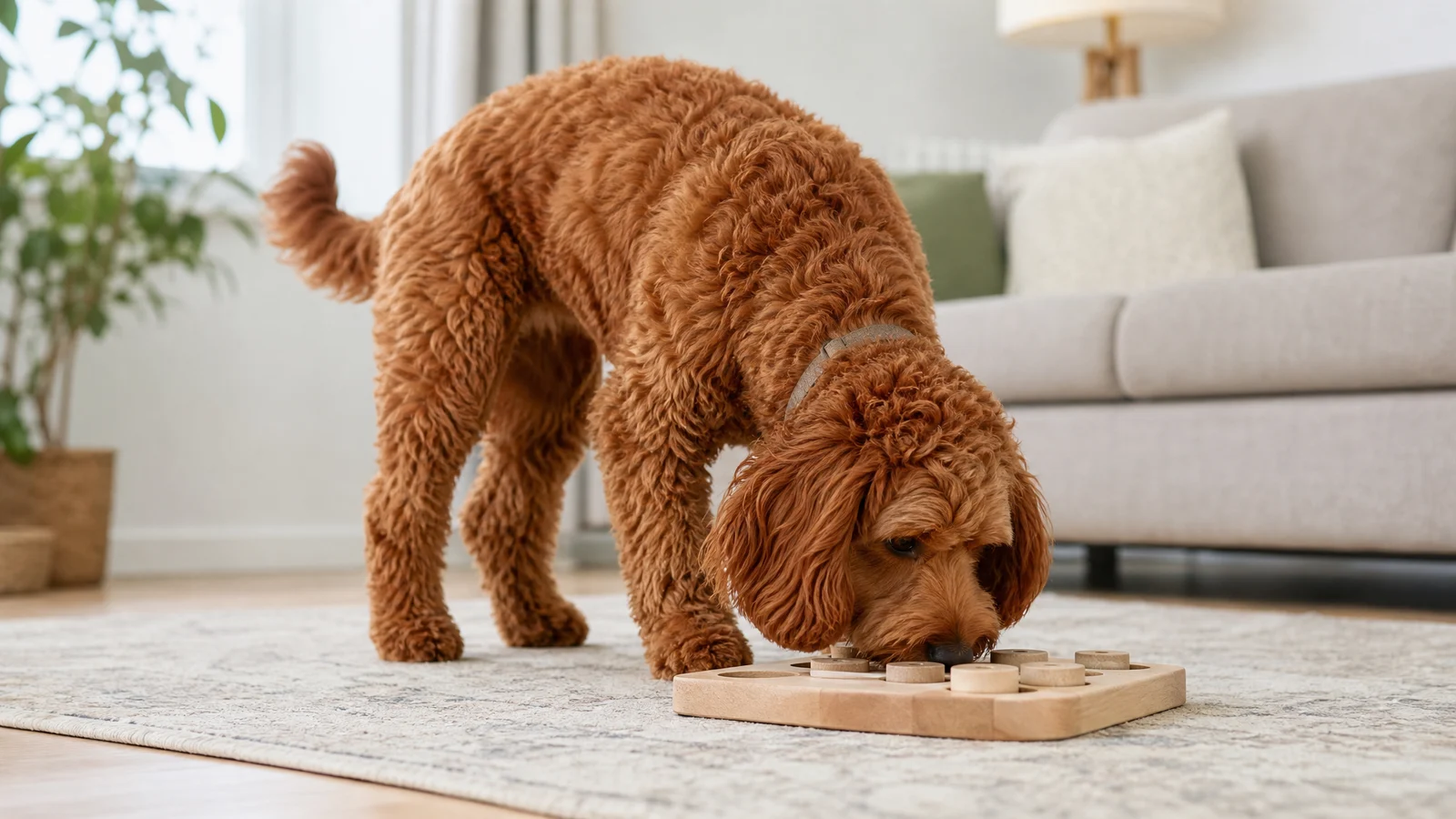 Exercise and jobsJobs and Brain Games for a Smart Cockapoo
 Training basicsCockapoo Training From Day One: A Reward-Based Guide
 Training basicsWhy Is My Cockapoo So Clingy? Teaching Calm Time Alone