 Cockapoo
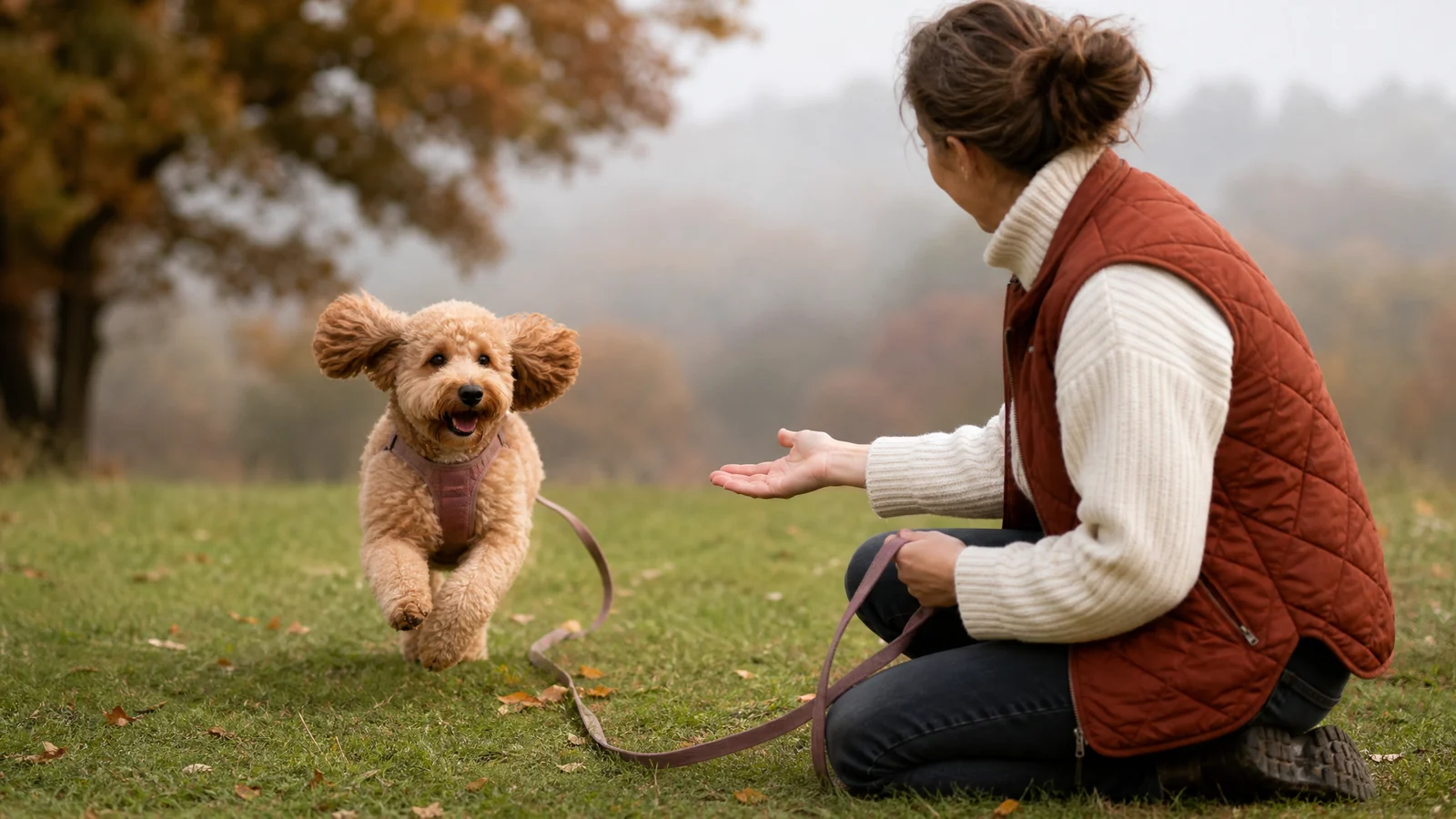
A Cockapoo following a smell has somewhere to go. Your recall needs to offer an equally clear destination: return close enough to collect a reward, stay available for a moment, then learn what happens next. Running vaguely in your direction before circling back to the grass is a different response from arriving where you can safely reconnect.
The nose matters, but it need not compete with every lesson. Cocker Spaniel scent work and the Poodle's scenting history help explain possible interests in this cross, without predicting your individual dog. Below, we build a complete return, then work out how smells, friendly people and unfamiliar places change the challenge. Exploration can remain part of a rewarding walk.
What Counts as a Complete Cockapoo Recall
Decide where the return should finish before practicing at a distance. A useful arrival brings your Cockapoo within comfortable reach, with enough attention left to take a reward and hear a release cue. Rewarding only the first turn can leave the rest of that movement unclear, particularly when the dog expects to resume sniffing immediately.
Choose a finish you can repeat without leaning over the dog. Delivering food beside your leg often gives a clear destination, provided the position is comfortable for both of you.
The reward should be ready before you call. Searching through a bag while your Cockapoo waits gives the surroundings time to reclaim their attention. Put suitable rewards where you can reach them easily, and practice the delivery while the dog is nearby. That small preparation matters more than choosing an impressive distance for the first attempt.
A complete return also includes a predictable next event. Sometimes you will continue walking, sometimes allow safe exploration and sometimes attach a walking leash. Avoid making every arrival the end of everything enjoyable. The practical question is whether your dog can return willingly while still trusting that coming close is worthwhile.
Close Recall Practice for a Cockapoo
Start in a quiet, secure space where your dog can choose to approach without being pulled or chased. Use a cue the household can say consistently. Guidance on teaching a return cue pairs a welcoming invitation with a rewarding arrival, then gradually takes that skill into more challenging surroundings.
An Arrival You Can Reward
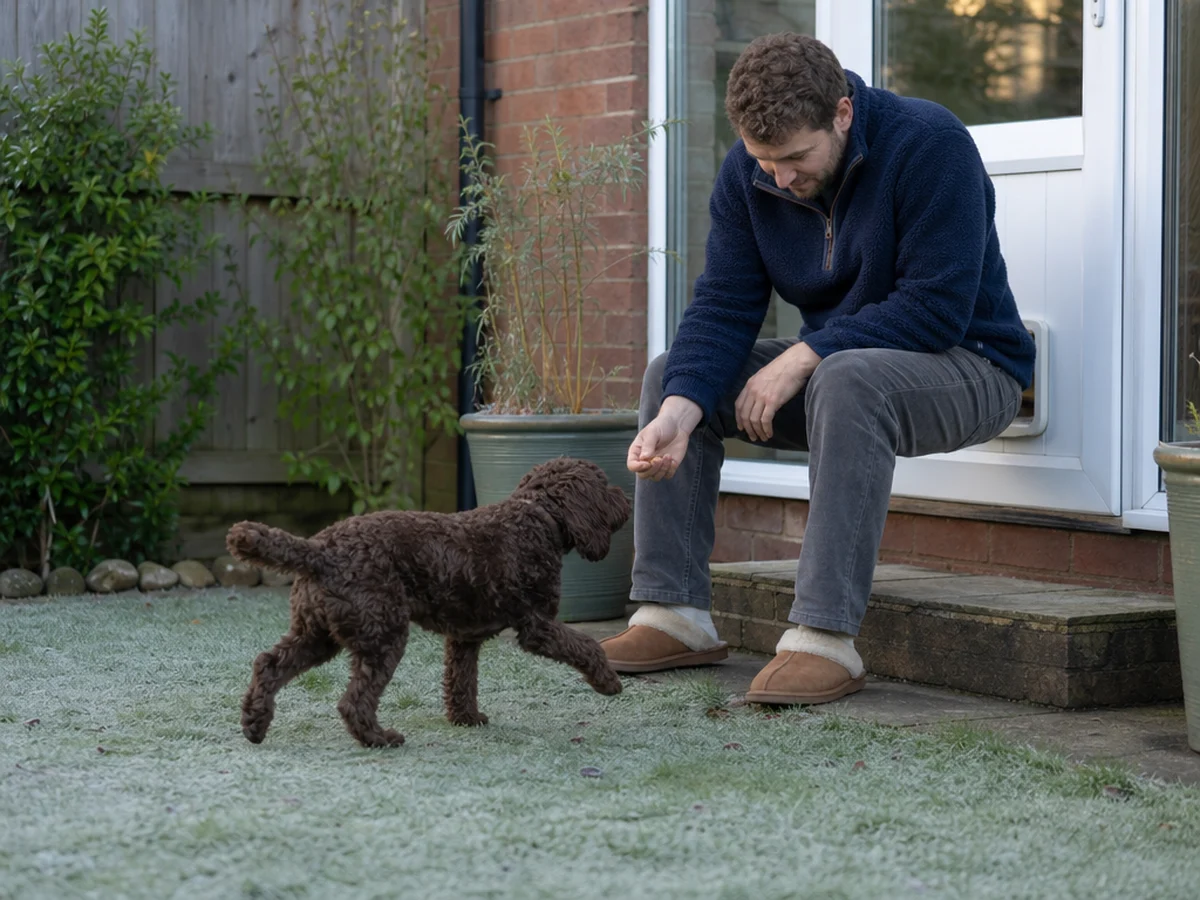
Wait until your Cockapoo is available to engage, say the cue once and make yourself easy to approach. When they reach the chosen position, acknowledge the arrival and give the reward there. Keep the path open. Calling from behind a chair or across a busy kitchen adds an obstacle before the movement itself is familiar.
Let the dog move away before another invitation. Repeatedly saying the word while they already stand beside you teaches little about traveling back from somewhere else.
- Choose a clear starting position with enough room for your Cockapoo to approach without weaving around furniture.
- Reward at the intended finish, close enough that the dog does not have to leave again to collect the food.
- Use a familiar release to end the pause, then allow another suitable activity before asking for a new return.
Our Cockapoo foundation guide explains consistent markers and rewards. Keep that language unchanged here. A new location is already a meaningful difference for the dog, so you gain little by changing the cue, marker and reward delivery at the same time.
Check the surface under your reward position. A slippery patch or tight corner can make the final approach awkward even when the dog is eager to reach you. Shift to comfortable footing and compare the arrival before interpreting a wide circle as reluctance to return.
Comfort With the Last Step
Some dogs approach readily but step away when a person reaches toward the harness. Teach that final interaction separately while your Cockapoo is relaxed. A small, comfortable hand movement followed by a reward can help make the approach predictable. Do not begin with a surprise grab after an otherwise cheerful return.
Watch whether the dog stays loose and willing. Moving away, stiffening or ducking under your hand means the handling needs an easier version, not a longer recall distance.
Once gentle contact is comfortable, include it occasionally after an easy arrival, then release the dog again. This keeps your hand from becoming an automatic signal that the outing is finished. If touch remains difficult, ask a qualified reward-based professional to help you plan the handling before relying on it outdoors.
Practice with the adults who normally walk your Cockapoo. Begin close to each person, keeping the familiar cue and delivery position. A dog who approaches one caregiver confidently may still need help understanding another person's posture, especially if that person usually clips the leash and immediately heads home.
Recall Space and Long-Line Management
A long line provides a safety connection while recall is still developing. It does not turn an unsuitable location into a good practice area. Choose open ground away from traffic, crowded paths and obstacles that can catch the line, and keep enough attention on your Cockapoo to manage movement before the connection becomes tight.
Advice on building recall around distractions recommends attaching the long line to a harness. Select equipment that fits your dog and learn how to handle it safely. Keep the line out from around hands, legs and other dogs, and avoid allowing a fast run to end abruptly at its limit.
Begin with modest space. A longer line gives you more to manage, not an obligation to use its full length.
Move with your Cockapoo as they investigate, keeping the practice area usable. If a person or dog approaches, shorten the available space calmly before the encounter becomes complicated. The Cockapoo loose-leash walking guide covers ordinary travel and greetings, which remain separate from asking for a return.
When a call is unsuccessful, preserve the safety connection and move to an easier position. Avoid turning the next attempt into a contest over the line. Note what held the dog's attention, how far away you were and whether they could respond before that distraction appeared. Those details identify a more useful practice than simply calling again.
Scent Can Become Part of Recall Rewards
Smells are not merely obstacles to remove. A Cockapoo who enjoys investigating can learn that returning to you sometimes opens access to more safe exploration. That arrangement gives the cue a role within the walk, instead of making your voice the interruption that ends every interesting moment.
A Brief Return to Exploration
Choose a mild sniffing opportunity that your dog can leave comfortably. Invite the return, reward the arrival, then use your release and move back toward the permitted area together. Keep the line managed throughout. The dog learns a sequence with an understandable outcome, rather than being repeatedly called away and left without another activity.
Allow some sniffing without a request attached. A walk made entirely of interrupted investigations can become frustrating even when every return earns food.
Increase difficulty through observation. If your Cockapoo can leave an ordinary patch of grass but not a fresh, concentrated smell, practice with the easier version and adjust the distance from the harder one. Do not assume that a successful return from one scent proves readiness for every smell in the same yard.
A Search Game Away From the Path
Simple introductory scent games provide another outlet for investigation. Use a safe, supervised setup where the reward is easy to find. Keep the search cue separate from recall so your Cockapoo can tell whether the current job is to investigate the area or travel back to you.
The game can reveal useful preferences without becoming a test of ancestry. Your dog may enjoy searching quietly, shared play or a mixture of activities, regardless of which parent breed they resemble most.
Finish the search before starting a recall rehearsal. Changing tasks while the dog is still working on an unsolved hiding place adds a conflict you do not need. Let the activity have its own conclusion, then use a fresh, manageable opportunity to practice the return.
Keep food-search materials separate from areas where the dog should not collect objects. A permitted search on a clear surface is easier to supervise than scattering rewards among litter or discarded belongings. Choose the location before inviting investigation, and finish by checking that the practice area remains safe.
People and New Places Change Cockapoo Recall
A person can be a stronger attraction than a smell for a socially interested Cockapoo. Treat that as a different training condition. Choose a working distance where seeing the person leaves your dog able to reconnect with you, and choose a helper who will follow the plan without calling, reaching or inviting an unexpected greeting.
Compare the obstacle with the skill you already have. The change below should make the task clearer, rather than simply demand a faster response.
| What Interrupts the Return | Useful Adjustment |
|---|---|
| A person invites the dog closer | Ask the helper to remain neutral and increase the working distance |
| The dog stops to inspect the new ground | Allow exploration first, then practice a shorter return |
| The dog approaches but passes you | Refresh the close arrival and reward position in an easier setting |
A new location deserves a new introduction. Keep the first request easy even if the distance looks familiar to you. Surfaces, smells and background movement all change what the dog must leave behind, so reliability in a quiet yard is useful groundwork rather than a guarantee about a busy park.
- Start where your Cockapoo can acknowledge you without needing repeated calls.
- Change either distance or the distraction, leaving the other part manageable.
- Reward successful arrivals generously and preserve opportunities for safe exploration afterward.
Maintain regular veterinary checkups and discuss a sudden reduction in responsiveness, especially when familiar cues become difficult in otherwise easy settings. Training history is only one part of that picture. If the pattern is persistent or confusing, bring specific observations to a qualified reward-based trainer who can watch the complete return.
Reliable Recall Before Greater Freedom
Judge progress by willing, complete arrivals across manageable situations, including comfortable contact and a clear release. Keep the safety connection where recall is uncertain, and choose secure areas for additional freedom. Your Cockapoo can enjoy their nose and their social interests while learning that returning to you has a dependable place within the outing.
 BehaviorBalancing Fetch and Calm for a Ball-Obsessed Cockapoo
 BehaviorWhy Is My Cockapoo Barking for Attention? Quiet Ways to Ask
 BehaviorA Cockapoo Who Guards Toys Can Learn a Happy Trade