 Cockapoo
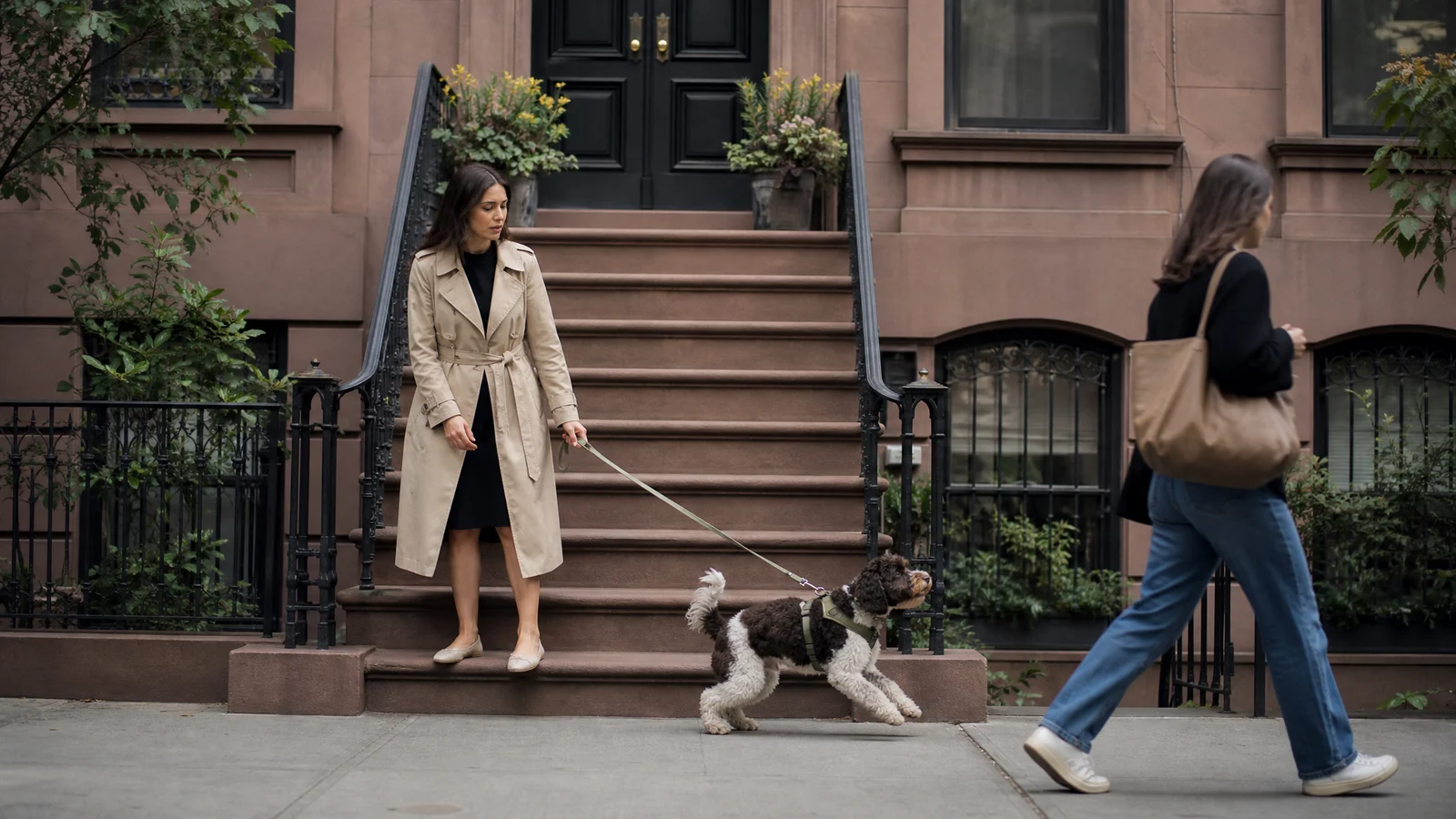
The leash clips on, the door opens, and a Cockapoo spots a person before reaching the sidewalk. The body surges forward because the greeting already matters more than the person holding the leash. Pulling can become efficient when tightness repeatedly leads to smells, motion, or social access.
Friendly interest may be one reason, but it is not a complete explanation or a designer-cross guarantee. Poodle and Cocker Spaniel descriptions suggest possible social and playful influences, while the individual dog's response supplies the useful evidence. We'll walk through the pulling loop, indoor foundations, loose-leash rewards, and the different decisions needed when a dog lunges rather than merely hurries.
Each layer keeps access and distance under human control while giving the dog a clear rewarded choice. That shared structure makes the next outdoor decision easier to understand.
Cockapoo Leash Training Loop
Leash training becomes clearer when you identify what happens immediately after tension. If the dog reaches a tree, advances toward another dog, or receives attention while pulling, the outcome can strengthen the route that produced it. The leash is not causing the learning by itself. Access is completing the loop. Once you can name that payoff, you can place it behind a behavior the dog is able to offer with a loose leash.
The pulling overview notes that excitement, exploration, and learned habit can all contribute. Those causes can overlap in one walk. Observe where tension begins, what the Cockapoo is moving toward, and whether added distance restores the ability to eat, turn, or check in.
Access Without Greeting
Do not treat presumed friendliness as permission to approach. A dog who wants contact may still be too activated to greet comfortably, and the other person or dog may not welcome an approach. Calm distance gives you room to reinforce useful behavior before deciding whether any greeting belongs in that outing.
Possible parent-breed traits remain questions, not conclusions. High social interest or playfulness may influence one Cockapoo, while another may pull mainly toward scent, home, or open space. The training plan should follow the reward operating in that moment rather than a story about what the cross must have inherited. Recheck that conclusion whenever the route or social setting changes.
Map one ordinary route before trying to fix the entire walk. Note where the first tension appears, whether it follows a smell or social sight, and how much distance restores slack. That small map tells you where to begin reinforcing and which stretch is currently too difficult for productive practice.
Leash Training Indoors
Begin where the leash predicts little excitement. A quiet room lets the dog notice the equipment, your movement, and the location of rewards without the competing rush of an open door. These simple rehearsals are not a substitute for walks. They make the first outdoor question recognizable.
Comfort With Equipment
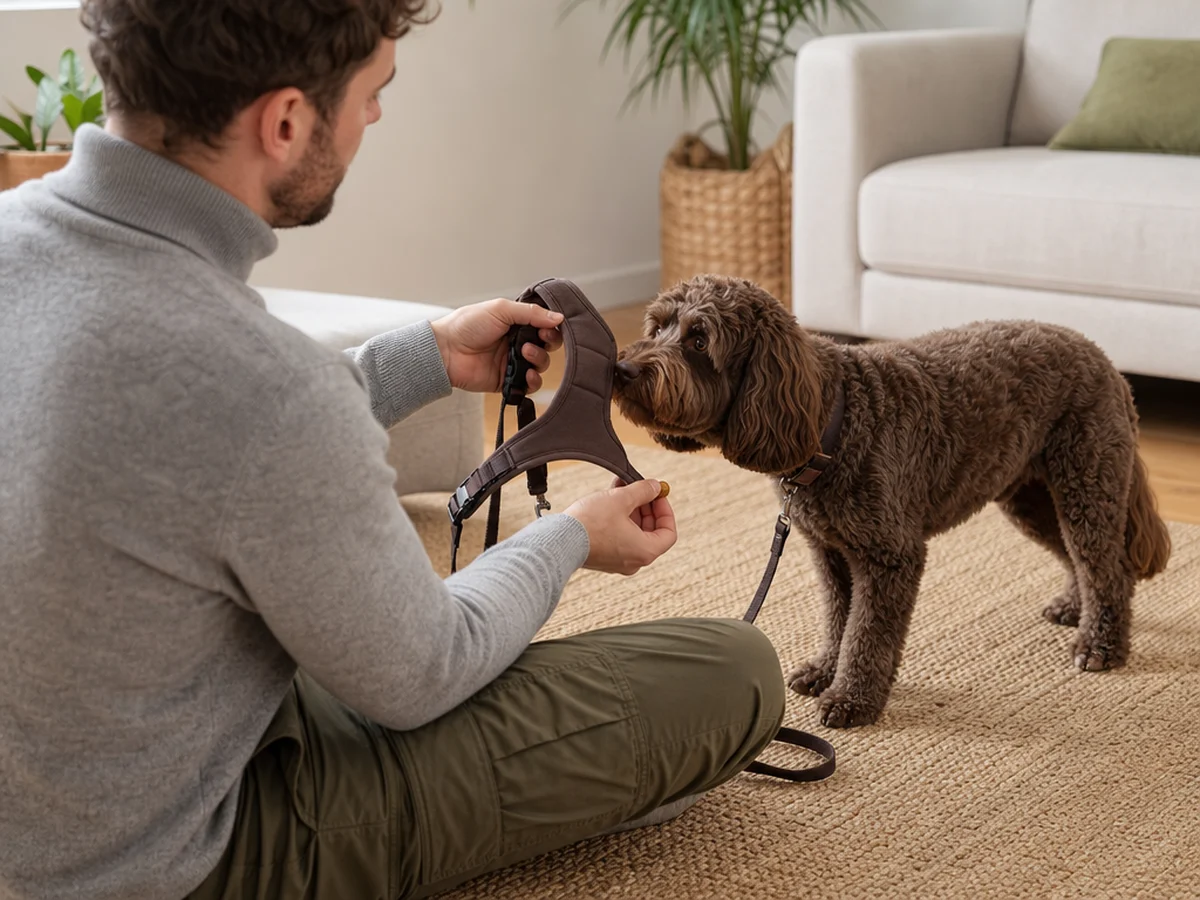
Present the walking equipment and reward voluntary investigation. Put it on smoothly, offer a reward, and remove it before fidgeting grows. Check that fit allows comfortable movement and that no part rubs or restricts the dog when they turn, sit, or lower their head.
Walk a few steps around the room while keeping the leash loose. Mark the moment the Cockapoo moves with you or turns toward you, then deliver the reward beside the walking line you prefer. Reward location can make staying close easier without holding the dog in position.
Orientation to You
Wait for a voluntary glance rather than repeating the dog's name. Mark the glance and reward it, then move again. Over several repetitions, the Cockapoo learns that checking where you are is part of movement, not an interruption that always ends exploration.
Add a gentle turn while the dog is still engaged. Signal before changing direction and reward when they follow with slack in the leash. Keep the turn wide enough for comfortable movement, especially with a puppy who is still coordinating their body.
The Doorway Layer
Approach the closed door and reward slack before touching the handle. If tension appears, step away and make the setup easier. Progress from hand on handle to a small opening, then to crossing the threshold only when the dog can remain connected to the exercise.
- Practice after ordinary indoor moments, not only when the Cockapoo is already expecting a walk.
- Keep rewards ready before approaching the door so timing remains clear and unhurried.
- Return to the room when the threshold overwhelms the skill, then rebuild with a smaller opening.
- Separate harness comfort, door calm, and actual walking so one difficult layer does not obscure the others.
Slack-Leash Training in Motion
Outside, choose a location where the dog can still notice you. A familiar quiet stretch may be more productive than a busy route filled with greetings. The quieter choice also exposes timing errors that a highly stimulating environment would conceal. Loose-leash walking is a moving conversation, so the environment must leave enough attention for both partners to participate.
Reward the Slack
Mark while the leash is loose and deliver the reward before tension returns. At first, reinforce frequently enough that the dog can discover the pattern. Vary the number of steps only after they are traveling comfortably, and let safe sniffing function as an additional outcome when appropriate.
The walking guidance includes changing direction rather than letting pulling control the route. Signal the turn, move smoothly, and reward the dog for catching up with a loose line. The purpose is shared movement, not surprising them.
Pause Without a Contest
When the leash tightens, stop forward progress and wait without pulling back. As soon as the dog turns back or loosens the leash, mark and move again. If they cannot disengage, move farther from the attraction or select a less busy path rather than waiting in a contest neither partner can solve.
Consistency matters because an occasional successful tow can keep the old route valuable. Everyone walking the Cockapoo should use the same basic response to tension and the same reward location. That shared rule is more important than demanding a formal position for an entire neighborhood walk.
Protect Exploration
A walk should not become a continuous test of proximity. Build predictable periods when the dog may explore on a loose leash, then ask for brief connected movement around crossings or other practical moments. Clear changes between these modes make the expectation easier to understand.
Adolescent dogs may find the environment newly compelling, even when indoor practice looks polished. Reduce difficulty without assuming the learning vanished. Shorter successful stretches, greater distance from distractions, and better rewards can preserve the skill while attention develops.
Greeting Walks
A greeting should be earned through a pattern the dog can repeat safely, not promised every time a person appears. Begin far enough away for the Cockapoo to notice the person and still orient back to you. Reward that return of attention before deciding whether to move closer.
Advance only while the leash remains slack and the dog can still respond. If pulling begins, curve away and create more room. Repeatedly arriving through slack teaches that calm movement can open social access, while tension changes the route without adding conflict. The helper should stay predictable so the Cockapoo is solving only the leash question.
At close range, ask the person to wait while you reinforce four paws on the ground. The greeting advice recommends removing attention when jumping occurs so the behavior does not produce the desired social outcome. Keep the exchange brief enough that the dog can leave successfully.
Some outings should contain no greetings at all. That choice prevents every passerby from becoming a possible destination and respects people and dogs who need space. Reward the Cockapoo for passing, turning away, or sniffing with you so the walk retains value without social contact.
Practice with willing familiar people before relying on strangers. Ask the helper to remain still while you approach on a curve, pause when tension rises, and greet only while the dog can move with slack. Familiar cooperation lets you protect the rule without asking an unknown person to manage the session.
Distance-Led Cockapoo Leash Training
Lunging needs more assessment than ordinary pulling. A dog may be trying to approach, trying to create distance, or reacting after arousal has exceeded their ability to cope. The movement alone does not reveal the emotion, so study what happens before it and how the response changes when space increases. Recovery at greater distance often provides the clearest clue for the next setup.
Social Frustration
A socially interested dog may stare, accelerate, vocalize, and lunge when the leash blocks access. Work at a distance where they can notice the trigger and turn back for a reward. Do not use a greeting as the automatic payoff, since that can make the surge part of the approach sequence.
Concern and Distance
A worried dog may lower their body, avoid first, freeze, or remain unable to recover after the trigger passes. Create distance promptly and use visual barriers where possible. The leash frustration guide describes using a practiced turn to leave a difficult situation before the response escalates.
Choose a wide route, cross the street early, or turn behind a parked vehicle before the dog loses access to familiar skills. Reward movement with you once space is available. Management is not failed training. It prevents rehearsal while keeping the Cockapoo able to learn.
When the Pattern Persists
Regular vet visits help establish a baseline for movement and general comfort. Seek veterinary input when leash behavior changes suddenly, appears alongside altered movement, or follows handling discomfort. A qualified behavior professional committed to rewards can build controlled setups when lunging is intense or safe distance is difficult to maintain.
Keep notes about location, distance, recovery, and what the dog could still do, without labeling them stubborn or aggressive. Those observations let a professional distinguish patterns and set a starting point. They also keep the plan centered on this Cockapoo rather than a deterministic account of either parent breed.
Cockapoo Walks Beyond Training
If door excitement is the larger problem, the next question is how to build calm away from constant activity. Our Cockapoo crate training guide treats rest and alone time as separate skills, which helps when a dog can walk well but struggles to settle afterward.
If outdoor trips are serving two jobs during puppyhood, coordinate walking practice with Cockapoo potty training. Keep the toilet trip direct and quiet, then allow exploration after success so pulling does not become the fastest route to the interesting part of the outing.
For the wider household system, use our guide on how to train a Cockapoo. Loose-leash progress lasts when doorways, greetings, rewards, rest, and outdoor attention follow compatible rules. The best walk is not a performance of perfect position. It is shared movement the dog and person can repeat comfortably.
 BehaviorIs a Cockapoo Good With Kids? Teaching Polite Greetings
 CareHow to Groom a Cockapoo at Home: Calm Brushing With Treats
 Training basicsRecall for a Cockapoo Who Follows Their Nose