 Cockapoo
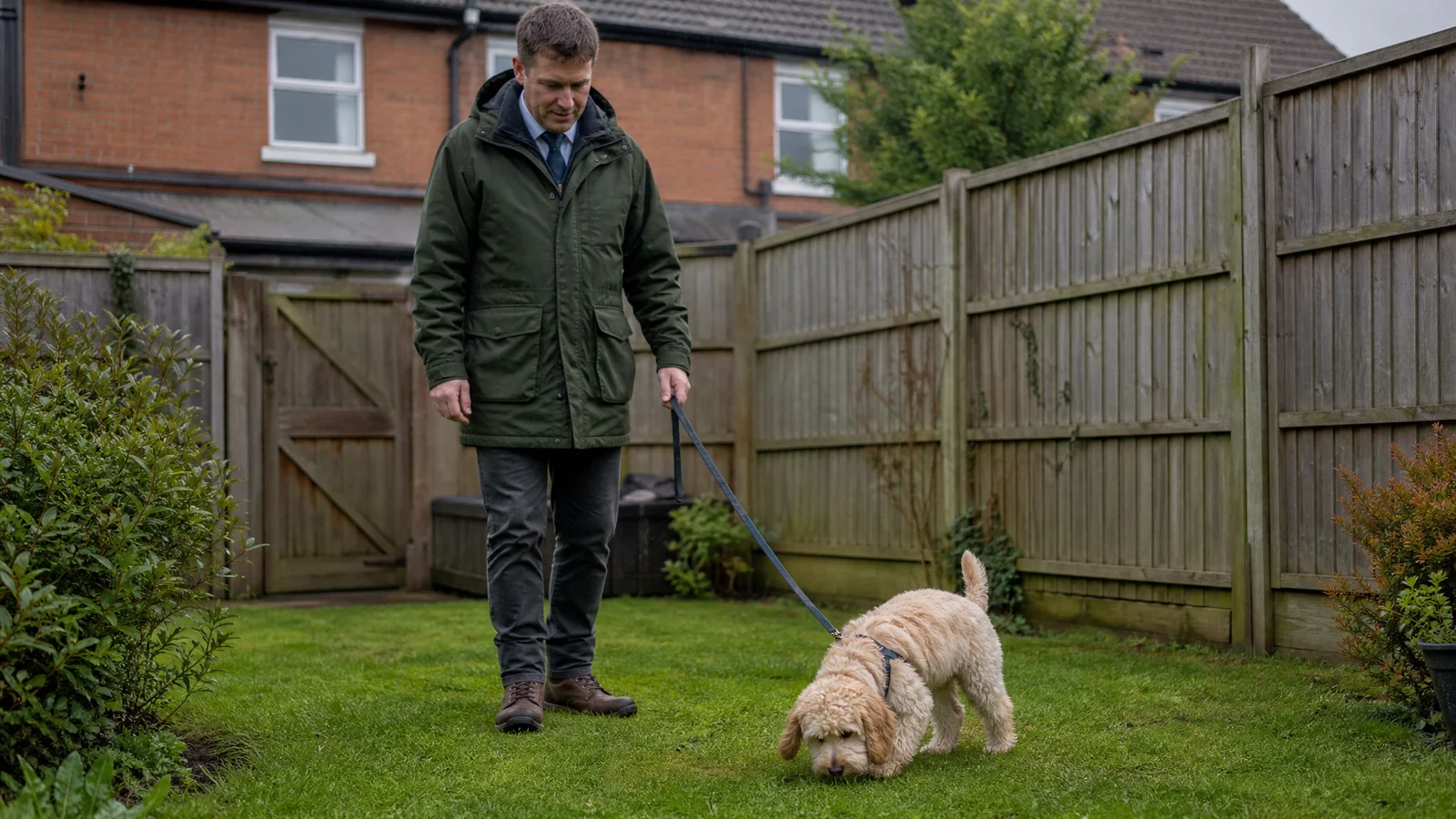
Cockapoos can learn a clear potty routine, but the breed label cannot promise how quickly one puppy will become reliable. Possible Poodle or Cocker Spaniel influences may affect motivation and sensitivity, yet opportunity, supervision, reward timing, health, and the individual puppy's development determine the plan you actually need.
House training is easier when the person controls the route and the puppy only has to recognize the destination. Below, you'll find a preparation stage, the first outdoor sequence, transition-based opportunities, active supervision, and a measured way to add freedom. We use rewards throughout, treat accidents as information, and avoid a universal timetable that could hide what this puppy is showing you.
Potty Training Before the Puppy Arrives
Preparation prevents hurried decisions during the moments that matter. Select one practical exit and one outdoor area that can be reached without delay. Put the leash, rewards, and weather gear together so every caregiver can take the same route with minimal discussion.
Decide where the puppy will stay when nobody can watch closely. A puppy-safe area limits wandering while preserving room to rest and move comfortably. A crate may be part of a voluntary rest routine, but it should not be used to force a puppy to wait beyond what they can manage.
Walk the chosen route yourself and remove avoidable delays. A sticking gate, distant reward container, or cluttered doorway can consume the moment when the puppy was ready. Practical preparation makes prompt outdoor access possible without rushing or startling them.
- Choose a direct route from the puppy area to the outdoor destination.
- Store small rewards where an adult can reach them before opening the door.
- Agree on the cue, the reward marker, and who is responsible during each handoff.
- Prepare an appropriate cleaner so an indoor miss can be handled calmly and thoroughly.
Night and daytime practice can use the same route and reward logic even when household activity differs. Keep the low-light trip quiet and prepared so the puppy is not asked to navigate a different system while sleepy.
Household structure should remain humane. The humane training statement supports reward-based routines that arrange frequent success.
The First Cockapoo Potty Trip
Take the puppy directly to the selected area on a regular leash. Stand quietly and allow enough room to sniff without turning the outing into a game. Use the cue once when elimination is likely, then let the environment become still enough for the puppy to finish.
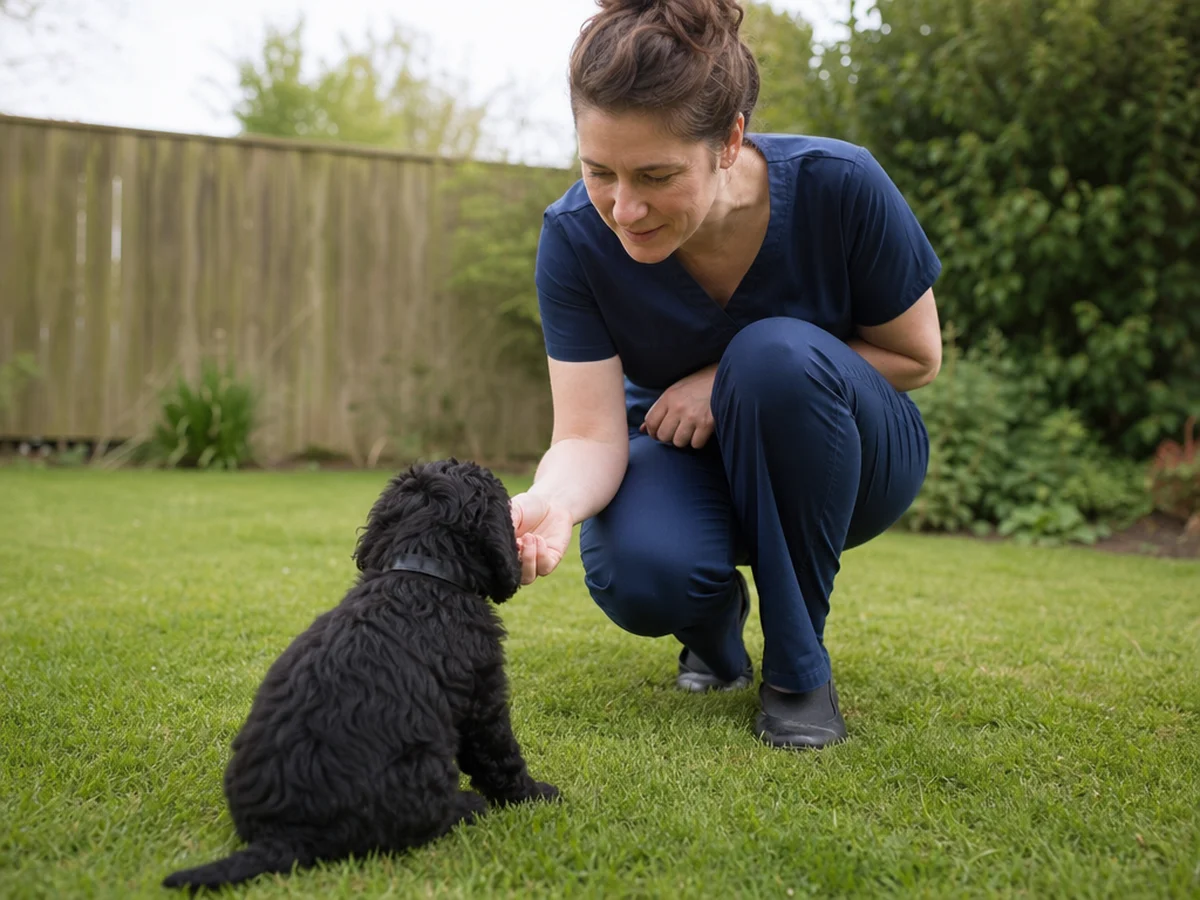
Mark the completed behavior and deliver the reward immediately at the outdoor location. Waiting until everyone is back inside can accidentally reward the return rather than the toilet choice. Keep the delivery calm, then offer a little exploration if the setting is safe and the puppy remains comfortable.
If the puppy does not eliminate, go back indoors and keep them closely watched rather than granting full access to the home. Try again when the puppy shows a change in activity or reaches another natural transition. This sequence keeps a quiet unsuccessful trip from becoming either punishment or an extended outdoor party.
Notice which conditions support concentration. Adjust for weather, surfaces, traffic, or smells without predicting the puppy's response from either parent breed.
Keep departures and returns emotionally ordinary. A large celebration before elimination can interrupt concentration, while a disappointed return can make the sequence unpleasant. Save the valued reward for completed outdoor behavior and let quiet repetition teach what the trip is for.
Transition Signals in Cockapoo Potty Training
A puppy's day offers logical moments for an outdoor opportunity. Waking, eating, drinking, active play, leaving a rest space, and moving into a new household activity all change what happens next. Use those transitions as prompts for the person rather than waiting for the puppy to communicate perfectly.
Waking and Rest
Be ready as the puppy wakes. Follow the prepared route, reward outdoor success, and return to the next ordinary activity.
Rest outside a crate creates the same transition. Waking is the useful signal, while our Cockapoo crate training guide handles voluntary rest separately.
Food and Play
Eating, drinking, and energetic play can create useful planning points, but they do not produce an identical clock in every puppy. Watch how the individual behaves after each event. Move the opportunity earlier when a pattern of misses shows the household is consistently waiting too long.
End play with enough calm to attach the leash and reach the destination. If excitement carries outside, wait quietly rather than adding more activity. The puppy can explore after success, which helps keep elimination from competing with every smell and movement in the yard.
Caregiver Handoffs
Name the supervising person at every handoff. Share the last outdoor result and the next likely transition instead of relying on assumptions.
A simple log can help a household coordinate, but it should record observations rather than promise a timetable. Note the event, the opportunity, and the result in a few words. Stop using the log once everyone can see and respond to the pattern without it.
Supervision During Cockapoo House Training
Active supervision means the puppy is close enough for someone to notice a change in behavior and respond. It does not mean staring continuously or following the puppy anxiously. Arrange the room so ordinary movement remains visible and the exit is easy to reach.
Potential signs include leaving an activity, sniffing a small area, circling, moving toward a previous accident location, or becoming suddenly restless. These behaviors are not exclusive to elimination, and individuals differ. Treat a meaningful change as a reason to offer the prepared route, not as proof that the puppy did something wrong.
- Keep the puppy in the same room as the supervising person when practical.
- Use a puppy-safe area during brief periods when attention must move elsewhere.
- Move outside at the first useful change instead of waiting for a dramatic signal.
- Hand responsibility to a named person before leaving the room or starting another task.
Supervision should become less intensive as reliable behavior appears, but freedom needs to be earned in small pieces. A puppy who succeeds in the kitchen has not automatically learned the rule in a quiet guest room. Each new area changes the path, smells, and distance to the exit.
Keep the original supervised area available while testing the addition. If the puppy repeatedly leaves the new room to approach the known exit, reinforce that choice. If they wander or lose the route, shrink the map and practice the connection before opening another space.
Reward-based teaching depends on timing and value. The reward training guidance describes how valued consequences can help a behavior recur. Outdoor reinforcement makes the correct location worth repeating while management prevents avoidable rehearsal indoors.
Plan supervision around real household limits. When work, cooking, or child care makes close attention impossible, move the puppy to the prepared safe area with an appropriate activity. Honest management is more useful than granting freedom and hoping the puppy signals loudly enough to interrupt everyone.
Accidents as Potty Training Information
When an accident happens, guide the puppy away if needed and clean the area without a confrontation. The potty training guidance warns that punishment can create fear and slow learning. It does not teach the missing step of reaching the chosen outdoor place.
Review the period before the miss while the details are still fresh. The purpose is to find a household adjustment, not to assign blame to the puppy or a caregiver. Change one part of the setup so the next similar moment becomes easier to manage.
- Identify the transition or activity that occurred immediately before the accident.
- Ask whether supervision, handoff, or access to the exit became unclear.
- Offer the next outdoor trip earlier or reduce freedom in that situation.
- Keep rewarding outdoor success with the same prompt timing and location.
One miss does not erase the pattern, and several misses do not prove stubbornness. Repeated problems may mean the opportunity is late, the outdoor setting is too distracting, or the puppy has access to more space than they can manage. Adjust the likely variable and observe the result.
Regular vet visits help establish a health baseline as the puppy grows. Contact your veterinarian when accidents become frequent despite a consistent setup, begin suddenly after progress, or occur with unusual thirst, straining, discomfort, or a change in general behavior. Rule out a physical cause before treating the change as a training puzzle.
Room-by-Room Cockapoo Potty Freedom
Expand access only after the puppy repeatedly completes the route from the current area. Open one additional room while keeping supervision active, then observe whether they can still orient toward the exit. If signals become harder to notice or accidents return, reduce the area and rebuild the connection.
Vary doors and outdoor locations gradually. Practice the familiar cue in the new place and reward there just as promptly. The concept is not fully generalized until the puppy can succeed despite changes in surface, route, weather, and the person holding the leash. Expand those variables separately so the household can identify which new layer needs more practice.
Coordinate house training with the larger learning plan. The guide to how to train a Cockapoo shows how household rules, rewards, handling, and outdoor skills can use one consistent language. This prevents potty work from becoming an isolated routine nobody follows during busy days.
Designer-cross ancestry cannot tell you when this Cockapoo is ready for more room. Food interest, social focus, or sensitivity may resemble descriptions of one parent, both, or neither. Use the puppy's actual pattern of success, communication, and recovery to decide when the next layer is fair.
A Cockapoo Potty Training Setup for Today
Set up the coming trip while there is still time. Place the leash and rewards at the chosen exit, tell every caregiver which outdoor spot to use, and decide who is supervising through the next household transition. That small setup removes several opportunities for delay at once.
Then reward the next outdoor success where it occurs and return to ordinary life. Reliable potty training grows from repeated clear opportunities, not from a perfect day or a breed-wide deadline. Let this puppy's behavior determine when to offer help, when to add freedom, and when a change belongs in a conversation with the veterinarian.
 Training basicsLoose-Leash Walking for a Cockapoo Who Greets Everyone
 BehaviorIs a Cockapoo Good With Kids? Teaching Polite Greetings
 CareHow to Groom a Cockapoo at Home: Calm Brushing With Treats