 Cockapoo
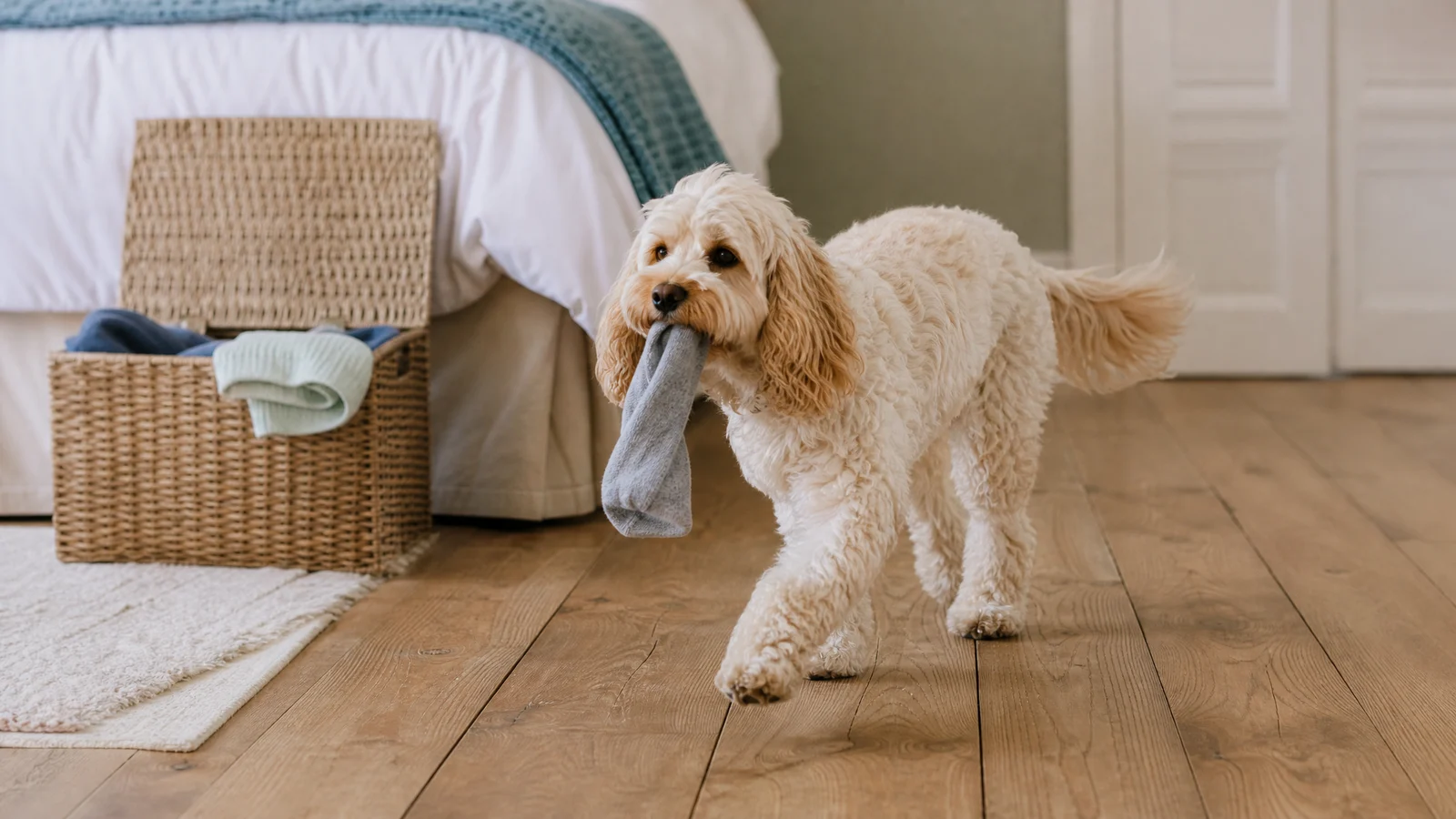
A sock usually travels through several human decisions before a Cockapoo picks it up. It leaves the drawer, lands beside the bed, moves into an open laundry basket and becomes available near the dog. Looking at that route gives you more useful prevention options than waiting for the familiar dash across the room with fabric in a mouth.
The reaction can make the object more interesting. A chase, a lively conversation or sudden shared play may add an enjoyable human response to something that already feels good to carry or chew. That does not mean every stolen object has the same purpose, or that your dog has worked out an elaborate plan.
This guide follows belongings through the home, matches permitted activities to how your Cockapoo uses objects and explains a calm response when something has already been taken. We then build a carrying game with appropriate toys, keeping it separate from the household items you want left alone.
The Household Routes Behind Cockapoo Stealing
Begin with the places where belongings pause between uses. Shoes beside the entrance, laundry waiting to be carried upstairs and bags left on the floor are common examples. A Cockapoo who cannot reach a closed drawer may still find the same items at a later stage, so storage needs to cover the whole route.
Laundry in Transit
Choose a basket or storage space the dog cannot access and use it consistently. The important detail is where clothes go while someone is sorting, folding or carrying them. A secure basket does little if its contents are spread across a low surface during a busy moment and left without supervision.
Keep the dog comfortably elsewhere during sorting if needed. Offer an appropriate activity before opening the basket, so laundry work does not begin with repeated retrievals.
| Temporary Storage | Practical Change |
|---|---|
| Clothes beside the bed | Place them directly in inaccessible laundry storage |
| Shoes near the entrance | Use a closed location everyone can reach conveniently |
| An open bag during unpacking | Unpack under supervision and close or put away the bag afterward |
Arrivals and Shared Spaces
Visitors may not know the household's storage routine. Give them somewhere suitable for shoes and bags before the dog joins the greeting. This is easier than interrupting an excited arrival to explain that a newly interesting object must be recovered. A clear place for belongings helps the person participate without needing a long set of instructions.
The Cockapoo family socializing guide covers broader greetings and children's interactions. For belongings, let an adult manage the storage. Children should ask for help if the dog takes something, rather than following with an outstretched hand or trying to start a contest over the object.
Review the route after an incident. Finding where access occurred gives the next caregiver a specific change to make, instead of a general reminder to watch the dog more carefully.
Alternatives That Make Cockapoo Stealing Less Useful
The permitted item should answer the activity your dog was seeking. Carrying a soft object toward a person, working steadily on a chew and pulling loose fabric apart are different uses of the mouth. One toy may not serve all of them well, even if your Cockapoo enjoys it in another context.
Match the Activity Before the Material
Guidance on normal chewing needs recognizes that chewing remains part of life for many dogs. Choose suitable options for your dog's size and style of use, supervise new items and remove damage before another session. A small-looking Cockapoo can still be an enthusiastic chewer.
Use the observation to choose a supervised alternative. These are possibilities to evaluate, not guarantees that a particular item will suit every dog.
| What the Dog Enjoys | An Appropriate Direction |
|---|---|
| Carrying an object toward people | A suitable play toy used in a shared carrying game |
| Quiet, sustained mouth activity | An appropriate chew selected for the individual dog |
| Searching for something interesting | A manageable supervised food or scent search |
Avoid using an old shoe as the permitted substitute if you want current shoes left alone. A clear difference between belongings and play items makes the household rule easier to maintain. People can then put shoes away consistently without expecting the dog to infer which nearly identical object has become acceptable.
Give the Alternative a Useful Location
Place permitted activities where your dog can actually use them when the household is busy. If company matters, a supervised resting spot near the family may work better than leaving a chew in an isolated room. Watch the response rather than assuming that the mere presence of toys makes the environment useful.
The Poodle parent's people orientation offers context for some Cockapoos' interest in shared activities. It does not tell you whether your dog wants company, a particular texture or something to investigate in a given moment. Try an appropriate option and observe what they choose when no one keeps prompting them.
Rotate options when that renews interest, but leave a successful activity alone while the dog enjoys it. Repeatedly replacing or collecting toys can turn quiet independent time into a series of human interruptions.
Responding Safely When Stealing Has Already Happened
Pause long enough to assess the object and the dog's response. An ordinary item carried loosely is a different situation from something dangerous or a possession the dog is guarding. Keep children back while an adult decides what to do. Safe retrieval takes priority over demonstrating that a familiar cue should work.
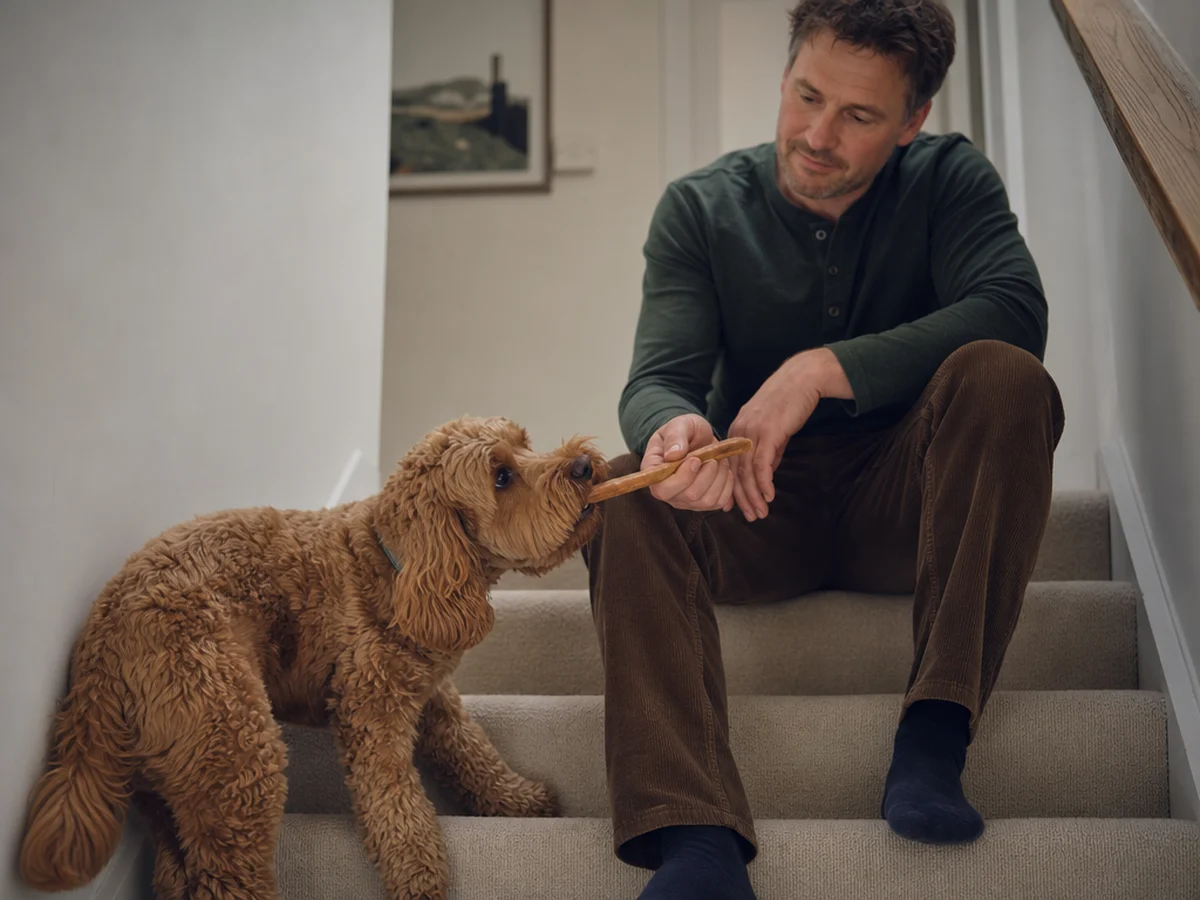
Advice on trading unsuitable objects recommends offering an appropriate alternative or a worthwhile reward. With a relaxed dog, allow a voluntary departure from the object and collect it only when they have comfortably moved away. Keep your approach unhurried so the exchange does not become another chase.
- Contact your veterinarian promptly if the object could be dangerous or pieces may have been swallowed.
- Give space and seek appropriate professional help when the dog stiffens, hovers, growls or resists an approach.
- After a comfortable exchange, put the unsuitable item away and leave the dog with an appropriate activity.
The Cockapoo toy guarding guide explains why a quiet stare can still matter. Do not try to solve guarding by reaching faster while the dog looks toward food. An exchange is useful when the dog can participate safely, and it does not replace professional guidance for a worrying pattern.
A necessary retrieval may still reward the dog with food. Keep immediate safety separate from preventing the next incident: reduce access and provide rewarding permitted activities earlier, so an unsuitable object is no longer the usual way to start an interaction.
A Permitted Carrying Job Instead of Stealing
Teach the game with an object that belongs in play from the beginning. The aim is to make approaching with that toy enjoyable, without encouraging your Cockapoo to search for belongings to bring over. Keep household objects stored away while the new activity develops, giving the dog an obvious permitted choice.
The Toy Starts the Invitation
Choose a suitable toy your dog can hold comfortably, and begin in a quiet space. Invite interest in it, then reward an approach or a short carry toward you. Keep the first movement easy. The dog does not need to retrieve across a room before shared play can have a recognizable beginning.
Make your own response appealing without starting a chase. Calm praise, a reward or a brief appropriate game can make approaching you worthwhile, depending on what your dog enjoys.
Observe whether the toy itself remains suitable during the activity. If your Cockapoo begins tearing pieces off or trying to swallow parts, stop using that item and choose another safe option. Carrying practice does not change the need to supervise materials and inspect them between uses.
Arrival Does Not Require a Grab
Let the dog approach without immediately reaching for the toy. You can acknowledge the arrival first, then use a comfortable release skill if the game requires collection. This separates coming near from losing possession, making it easier to see whether the dog enjoys approaching or prefers to stay just beyond reach.
When release is unfamiliar, teach it separately with a suitable reward and an ordinary practice object. Do not make the first carrying game depend on a difficult exchange.
The Game Has Its Own Finish
End with a familiar signal and a quiet next activity while your Cockapoo can still disengage. Store the play item when appropriate and allow rest. A useful carrying game should fit around household life, rather than leave the dog searching for a sock as soon as the permitted toy disappears.
If that search begins, reconsider the transition and the remaining access to belongings. The answer may be an easier finish, a different independent activity or a storage gap you missed. Avoid assuming that the dog needs a longer or more exciting game every time another object is taken.
Stealing and Damage During Absences
Look separately at damage that clusters around being left. Guidance on patterns of destructive chewing notes that separation-related chewing may appear alongside other changes such as pacing or vocal behavior. That pattern needs assessment rather than a conclusion that a better toy will solve every absence.
Record what you can observe about departures and returns. Include whether the dog settles, which objects or locations are affected and whether similar chewing happens while people are present.
Maintain regular veterinary checkups and discuss new, persistent or unusual chewing. A qualified reward-based professional can also help interpret the setting and build an appropriate plan. Keep access to dangerous objects controlled while obtaining that help, without treating damage as evidence that the dog intended to upset the household.
Keeping the Cockapoo Household Arrangement Useful
Review whether the new storage works for people as well as the dog. An inconvenient shoe cupboard or a laundry system nobody follows will gradually reopen the old route. Put the easiest human habit where you need it, so prevention survives busy arrivals and ordinary tired evenings.
Notice permitted choices when they happen without prompting. Joining a brief toy game or allowing uninterrupted use of a suitable chew can make those choices worthwhile. The useful outcome is a dog with activities they can enjoy, alongside belongings that reliably remain unavailable.
Change the arrangement when your Cockapoo's interests or household routines change. A new bag, a visiting child or a different play preference can create fresh opportunities. Respond to the specific gap, keeping safe retrieval and rewarding alternatives within a practical plan the whole family can maintain.
 Puppy trainingHow to Build a Potty Schedule for a Cockapoo Puppy's Small Bladder
 Training basicsAre Cockapoos Easy to Train? Read the Individual Dog
 Puppy trainingIs Your 6 to 8 Month Old Cockapoo Biting or Aggressive?