 Cockapoo
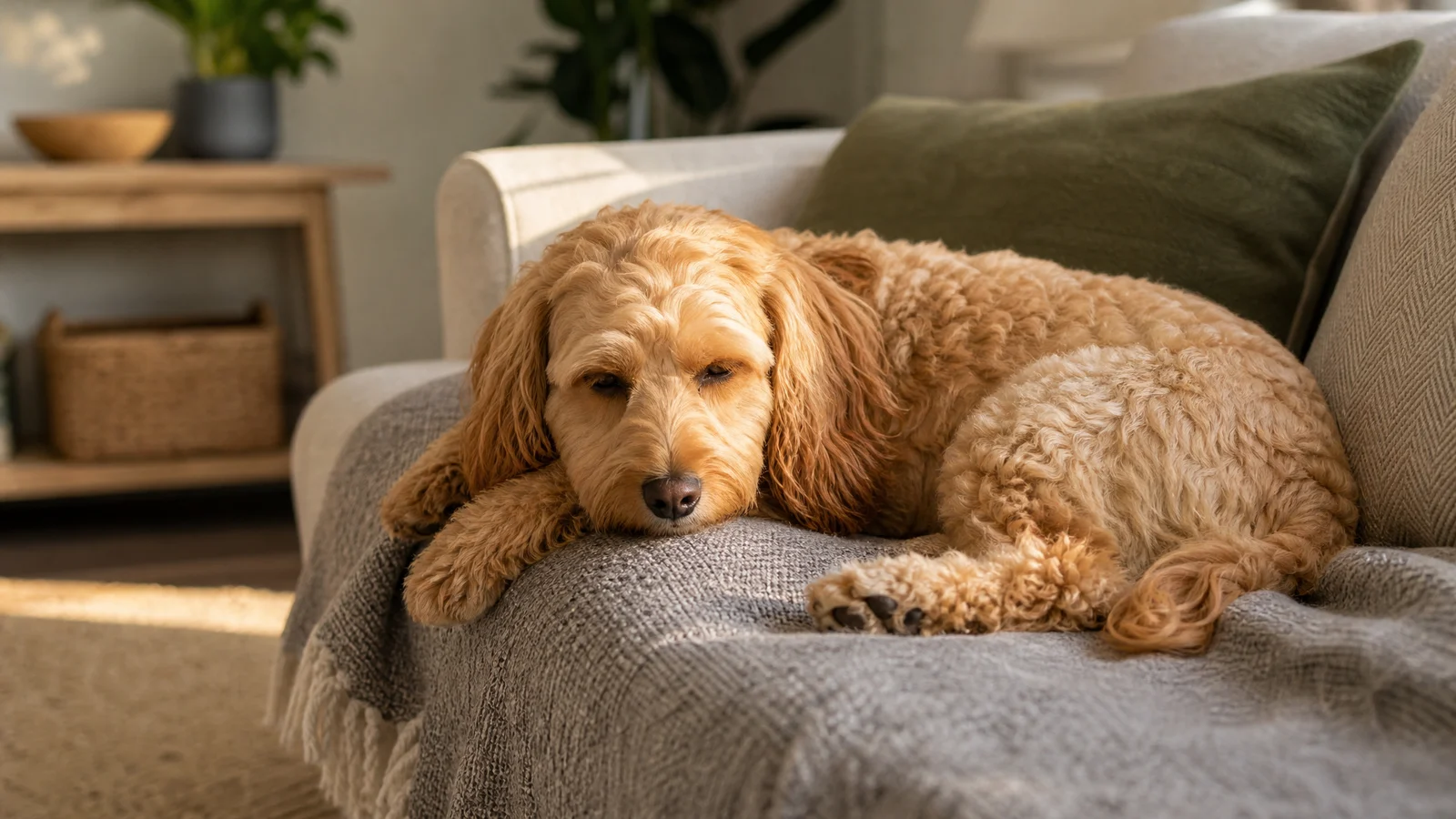
A restless Cockapoo does not always need a longer or faster walk. Adding intensity whenever they pace, grab objects, or demand attention can leave an already tired dog more activated. The useful first move is to identify whether they need movement, mental engagement, a calmer setting, or uninterrupted rest.
Cockapoos are designer crosses, so Poodle and Cocker Spaniel descriptions offer possible influences rather than a guaranteed energy level. This guide covers exercise through visible signs before, during, and after activity. We will also match brain games to the individual, adjust the plan across life stages, and finish with a two-week reset built around observation instead of a fixed quota.
The aim is a repeatable reading of the dog, not a contest to produce the most tired pet. That reading keeps comfort, curiosity, and recovery in the same picture.
Restless Energy Before Cockapoo Exercise
Begin with the context around the behavior. A dog who wakes ready to move, brings a toy, and remains able to respond may be asking for purposeful activity. A dog who has been busy for hours, mouths hands, and cannot stay with an easy task may need a quieter transition rather than another burst of exertion.
The parent breeds do not settle the question for you. A Cockapoo may show the Poodle parent's active playfulness, the Cocker Spaniel parent's more moderate exercise pattern, a blend, or something different. Treat those descriptions as possibilities to test against the dog's body, choices, and recovery.
Movement Seeking
Look for organized bids such as waiting by the door, offering a familiar game, or checking in while moving around the room. These signs do not prove a precise exercise need, but they suggest the dog can think while active. Choose a walk, controlled play, or another familiar outlet and watch what changes.
A useful session leaves room for communication. If the Cockapoo can turn with you, pause to sniff, and take a reward comfortably, the setting is probably manageable. When attention disappears at the doorway, reduce the challenge before deciding the dog needs to run harder.
Overtired Activity
Overtired behavior often looks busy but disorganized. The dog may switch rapidly between jumping, grabbing, barking, and wandering without completing anything. Lower household stimulation, offer water and a comfortable resting place, and reward voluntary calm without repeatedly cueing a dog who is struggling to process information.
Exercise can support behavior, but it does not solve every behavior problem. The exercise guidance notes that an activity routine may help unwanted behavior without fixing its cause. That distinction protects a stressed dog from being pushed through a setting that is making them less comfortable.
Cockapoo Exercise Signs During Activity
The middle of an activity gives better information than the distance covered. Watch posture, pace, breathing, response to familiar cues, and willingness to pause. None of these signs should be read alone. Together they show whether the current combination of environment and effort still suits this individual.
| What you see | Likely reading | Useful response |
|---|---|---|
| Loose movement, easy sniffing, and voluntary check-ins | The dog remains comfortable and able to think | Continue while preserving pauses and choice |
| Faster scanning, harder pulling, and missed familiar cues | Arousal or environmental difficulty is rising | Add distance, lower intensity, or move somewhere quieter |
| Reluctance, altered movement, repeated stopping, or unusual lagging | Comfort may be changing | End the activity calmly and assess before the next outing |
The table is a decision aid, not a clinical conclusion. Weather, surfaces, novelty, sleep, and physical comfort can all change what the same walk feels like. Compare the dog with their own normal pattern instead of another Cockapoo or an idealized parent-breed description.
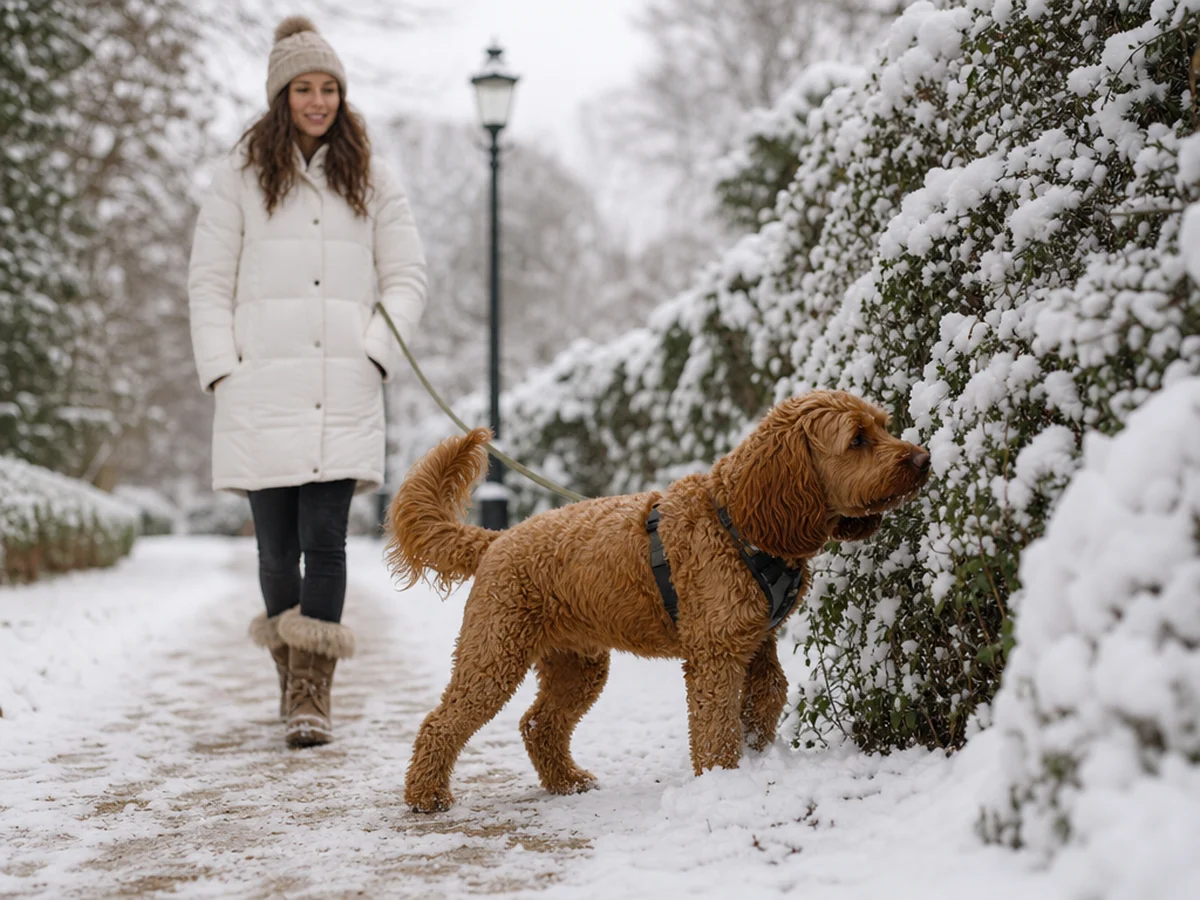
Let sniffing be part of the session rather than treating every pause as lost exercise. A steady exploratory walk may meet more needs than a hurried route that keeps the dog near their limit. The goal is useful engagement and comfortable movement, not proof that the dog can keep going.
Also notice whether the dog can choose a slower option when one is available. Moving from a brisk stretch into sniffing, pausing for water, or turning toward home without resistance suggests useful flexibility. A dog who only accelerates may need an easier environment and a more deliberate downshift before the session continues.
Brain Games for Busy Cockapoo Energy
Mental activity complements physical exercise when it gives the dog a clear problem they can solve. The enrichment ideas include opportunities to smell, chew, chase, play, and scavenge. Select a safe version that fits the individual instead of assuming every Cockapoo will enjoy the same puzzle.
Search Games
Begin where success is obvious. Place food in open view, release the dog to find it, and allow their nose to lead without pointing at every piece. Once the search looks relaxed and purposeful, vary the location or add a simple cover while keeping the problem easy enough to solve.
Search work can fit a rainy day, a short recovery period, or the end of a walk. It also connects naturally with our guide to Cockapoo sports, which explores how to turn interest in scent, retrieving, and learning into structured activities without predicting a talent from ancestry.
Thinking With You
Some Cockapoos may prefer a social puzzle such as touching a target, moving to a mat, or choosing between two familiar cues. Use a reward the dog currently values and mark the successful choice promptly. If they guess rapidly or leave, simplify the question instead of repeating the cue more loudly.
- Rotate easy searches, food puzzles, and short cue games instead of stacking every challenge into one day.
- End while the dog is still solving comfortably, then provide a calm transition rather than an abrupt demand for stillness.
- Change only one feature at a time, such as location, duration, or distraction, so their response remains readable.
- Count relaxed re-engagement and recovery as progress, not just speed or the number of repetitions completed.
We favor variety with a purpose. A new object is not automatically enriching, and a difficult puzzle is not automatically better. The right brain game produces curious engagement without frustration, supports the rest of the day, and can be made easier as readily as it can be made harder.
Balance novelty with familiar success. Repeating an easy search in a new room may be enough of a challenge, while a complex puzzle in a noisy space may ask several hard questions at once. Watch whether the Cockapoo investigates steadily, pauses, and returns, then adjust the next game from those responses.
Recovery After Cockapoo Exercise
Recovery begins before the activity ends. Slow the final part of a walk, offer an easy sniffing opportunity, and return home without launching directly into excited greeting or rough play. A predictable downshift helps the dog move from engagement toward rest without expecting exhaustion to do all the work.
Afterward, notice whether the Cockapoo drinks normally, settles into a comfortable position, and wakes ready for ordinary activity. Persistent pacing does not automatically mean the session was too small. It may reflect difficulty changing states, household noise, unmet needs elsewhere, or discomfort that deserves attention.
Teach settling as its own rewarded skill. Place a mat in a low-traffic area, mark voluntary contact with it, and deliver rewards where remaining there is convenient. Our Cockapoo training library covers rest and distance as separate skills, which is useful when a dog can relax near people but finds space harder.
All training should stay reward based. The reward guidance shows how useful consequences can strengthen the choices they follow. Reinforcing check-ins, easy transitions, and voluntary settling gives the dog practical answers before arousal becomes difficult to manage.
Household activity can either support or interrupt recovery. Reduce unnecessary excitement, ask family members to give the dog space, and place water and the resting area where traffic does not force repeated movement. If calm returns only when the room changes, include that environmental detail in the next routine.
Exercise Changes Across a Cockapoo's Life
Puppies need opportunities to move, explore, play, and learn, but their bodies and attention are still developing. Favor varied self-paced movement, short outings, and easy training over a single demanding session. Watch the puppy who is present today rather than following a formula based only on age or expected adult size.
Adult needs can shift with routine, season, environment, and health. An active adult may enjoy longer exploration or a sport foundation, while another individual thrives on moderate walks and richer sniffing. Possible Poodle or Cocker Spaniel influences remain background information, never a fixed rule for intensity.
Older dogs still benefit from regular activity adapted to what they can do comfortably. The senior exercise overview emphasizes adjustment to ability through gentler options and shorter play. Observe footing, willingness, and recovery, then let comfort guide changes rather than asking the dog to match a former routine.
Regular vet visits create a useful baseline for movement, weight, and general comfort. Arrange veterinary guidance when exercise tolerance changes unexpectedly, movement looks different, or recovery no longer resembles the dog's normal pattern. Training cannot determine whether pain or illness is changing behavior.
A Two-Week Cockapoo Exercise Reset
A routine also needs true rest days from novelty, even when comfortable movement continues. Familiar routes and easy games can reveal whether constant new stimulation was contributing to the unsettled pattern.
During week one, keep the familiar routine and record broad patterns in plain language. Note what happened before activity, which type of movement or brain game you chose, how the dog engaged, and what recovery looked like. Do not turn the notes into a score or compare them with another dog.
During week two, change one feature that the first week made relevant. You might replace part of a hurried walk with sniffing, add an easy search before an expected restless period, or shorten an activity followed by poor recovery. Keep the remaining conditions steady enough to tell whether that change helped.
The reset succeeds when the routine becomes easier to read, not when the Cockapoo reaches a universal amount. Comfortable movement, flexible attention, and a smoother return to rest are more useful signals than sheer tiredness. If the pattern worsens or physical comfort is uncertain, pause the experiment and bring the observations to your veterinarian.
 Training basicsHow to Potty Train a Cockapoo Puppy Without Guesswork
 Training basicsLoose-Leash Walking for a Cockapoo Who Greets Everyone
 BehaviorIs a Cockapoo Good With Kids? Teaching Polite Greetings