 Cockapoo
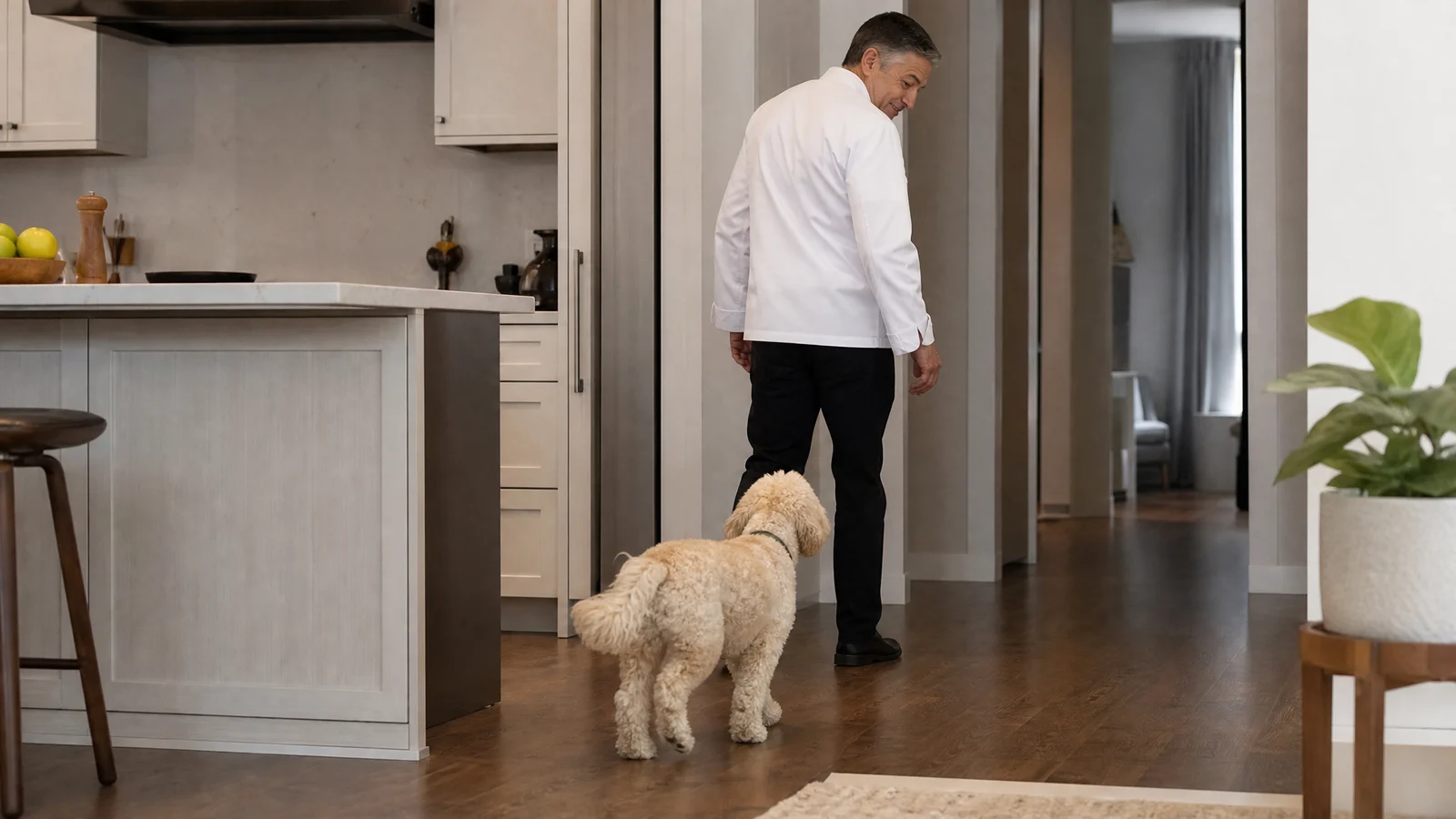
Standard crate advice is tidy: keep sessions short, ignore the crying, and stick to a schedule. Many Cockapoo owners report something messier, a dog who tails them from room to room and protests the moment a door comes between you. Other owners get a puppy who naps in the crate for about an hour without a peep.
That spread is the point, so plan for your own dog and not an average. We have spent years focused on Cockapoo behavior and training, and gradual, rewarded practice suits both kinds of puppy.
We'll walk you through why Cockapoos cling and how to choose and place a crate, then the three stages of crate work (a happy introduction, closing the door, leaving the room), then setbacks and what a settled adult looks like. Done well, the crate becomes a spot your dog picks on their own.
Why Cockapoos Cling Before Crate Training
A Cockapoo who shadows you to the bathroom is doing what both parent breeds were built to do. Knowing where the clinginess comes from tells you how slowly to move, and it helps you separate a habit from a real struggle.
The Poodle Side
Poodles score 5 of 5 for affection with family and are described as very people oriented. They also rate 5 of 5 for mental stimulation needs and 4 of 5 for barking. A Cockapoo with this streak may treat your company as the best part of the day and say so loudly when you step out.
The Cocker Side
Cockers score 4 of 5 for affection with family and want to please the people around them. They are also rather easily motivated by food, play and praise, which gives you plenty of ways to pay for calm behavior. Cockers can be sensitive, and a Cockapoo may inherit that, so keep sessions relaxed. Our guide to Cockapoo smarts and eagerness to please shows how to use that softness in your favor.
Normal Clinginess Versus Distress
Many owners report mild clinginess, such as brief howling when left or whining when ignored too long. It tends to be an attention-seeking habit that improves over time, and owners who work from home still see it. Short, rewarded practice at calm alone time helps in every household.
True separation anxiety looks different. Some owners feel housebound at first because leaving seems impossible, while others suspect they are reading anxiety into ordinary puppy protest. If you can't tell which you have, film a few minutes of your dog alone and bring it to your next regular vet visit.
Choosing the Crate
Three choices matter before you start: size, placement and bedding. Get them right and every later step goes more smoothly.
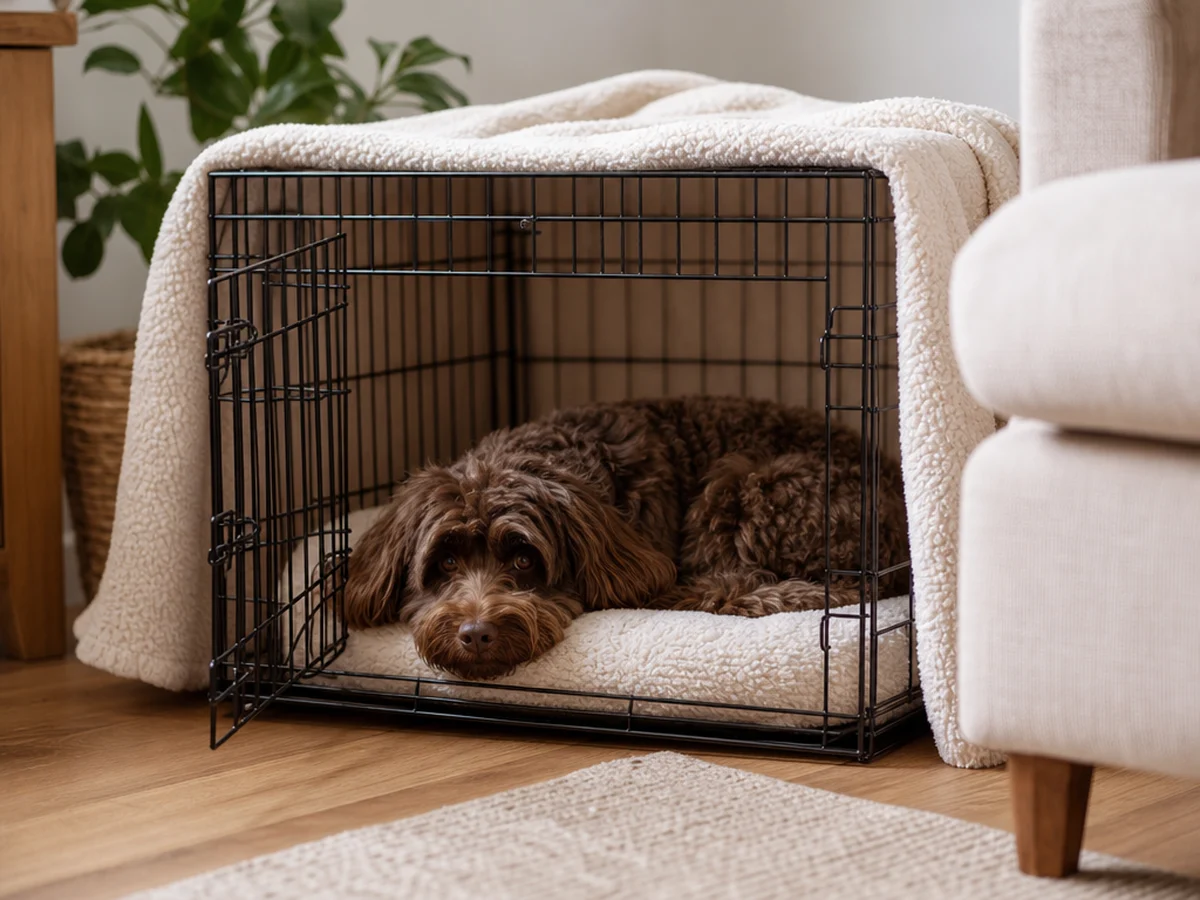
Cockapoos vary widely in adult size because the Poodle parent varies, so owners end up buying very different crates. Ask the breeder what adult size to expect. Then pick a crate where your grown dog can stand without ducking, turn around and stretch out lying down. For a puppy, buy for the expected adult and use a divider panel, because extra room invites one corner to become a bathroom.
Put the crate in the room your family uses most in the evenings, not a far-off spare room. A people-loving dog can read isolation as punishment even when you meant nothing by it. Add a washable mat that can't be shredded easily, and remove anything your dog could chew apart and swallow.
Cockapoo Crate Training Introduction
Stage one has no door-closing at all. Your only job is to turn the crate into the most rewarding corner of your home with treats, meals and easy exits. Our Cockapoo day-one training plan shows where this fits in your puppy's routine.
The First Day
Fix the door open so it can't swing shut. Scatter a few tiny treats on the mat and let your dog find them at their own speed. They can walk in, eat and wander out as often as they like.
Pick a cheerful cue word and say it as they step in. Keep each visit short and end it while your dog still seems interested.
The First Week
Serve meals inside the crate, with the bowl near the door at first and a little deeper each day. Once your dog eats happily at the back, add a stuffed chew that appears only here. Treat the whole job as a series of small rewarded steps and move on only when the current one looks easy.
Sit beside the open crate and drop a treat whenever your dog settles. Say a short word like "yes" at the moment they lie down, so they know exactly what earned the reward.
Nighttime
Nights are the hardest part for many families. Some owners report a dog who adjusts well to the crate but needs a person close for roughly the first month, with some sleeping downstairs or beside the crate. Treat that as a short phase to plan for and not a fight to win.
Start with the crate near your bed and shift it farther away over the following weeks. Keep nighttime potty trips quiet and dull, then settle your puppy straight back in. Our potty routine for Cockapoo puppies covers the timing.
Closing the Door in Crate Training
Stage two adds the door. You are still in the room and still handing out treats, and the goal is a closed door that becomes ordinary. A rushed first close can undo days of good work, so go slowly.
Timing
Start with a couple of seconds. Latch the door, feed a treat through the bars, then open up. Build to longer rounds, mixing short and slightly longer ones so your dog can't predict the pattern.
Treats
Pay for quiet, not for noise. Deliver tiny soft pieces while your dog is settled, and hand over the stuffed chew once the door is shut. Small rewards keep sessions moving without filling your dog up.
When to Open
Open the door during a calm moment, even a brief one, so your dog learns that quiet is what makes it swing open. If they fuss, wait for a short pause. If they turn frantic, end the session calmly and make the next one easier.
Leaving the Room in Crate Training
Stage three asks the most of a people-loving dog, because now you disappear. Liking the crate and relaxing alone are separate skills, since a dog can love the crate with you in view and still fall apart when you vanish. Change only one thing at a time: how far you go, how long you stay gone, or how you come back.
Distance
Begin seated beside the crate while your dog rests. Move your chair a little farther away, then stand, then cross the room, then reach the doorway. If your dog gets up, whines or watches you closely, you moved too fast, so drop back to the last spot that looked dull to them.
Duration
Once you can step out of sight, stretch the time in small, uneven jumps and slip in an easy short one now and then. Some puppies handle about an hour alone, while others need far longer to reach even a few minutes. Let your dog set the pace. Crates alone shouldn't be used to manage true distress, as this crate guidance explains, so bring in your vet or a certified behaviorist if you suspect it.
Returns
Keep departures and arrivals low-key. Skip long goodbyes and big greetings, and give attention once your dog is calm. A good walk with plenty of sniffing beforehand makes resting far more likely.
Crate Training Setbacks
Setbacks are normal, and the 5 to 8 month stage is a common time for them. Owners describe barking and general pestering, such as demanding attention and stirring things up, far more than anything aggressive. Give your dog better ways to earn your attention with trade games, chew outlets and rewarded settling.
The common advice to ignore all crying doesn't fit this breed well. Protest and panic are different, and a sensitive Cockapoo needs you to tell them apart. Check which of these you are seeing:
- Protest comes in bursts, pauses when you stay calm nearby, and eases when a chew or treat appears.
- Panic shows as nonstop howling, frantic scratching at the door, drooling or refusing food.
- If you see panic, end the session, return to an easier step and stay with your dog.
- If panic keeps happening, get professional help before leaning on the crate any further.
Outside your practice sessions, arrange for a person to keep your dog company until things improve. That is a practical step and not a failure, since most dogs with separation anxiety cope well when company is nearby, and that company does not have to be you.
Living With a Calm Cockapoo
Many owners say their Cockapoo changed a lot as they matured. The wild, pushy adolescent phase gave way to a much calmer dog, with the shift reported somewhere between 1 and 2 years. The rough patch is a passing season and not your dog's permanent personality.
Expect the crate to move from training tool to chosen resting place. Many dogs wander in on their own to nap, especially when the door stays open and the stuffed chew stays special. Keep that routine steady, and keep guest greetings calm too, as covered in our guide to greeting kids, dogs and strangers.
Realistically, your adult will probably still prefer company and may whine if ignored too long. That is fine. A settled Cockapoo can rest alone calmly for a reasonable stretch and greet you with a wag instead of a meltdown. Keep up regular vet visits so any change in behavior gets checked early.
 Exercise and jobsIs Your Cockapoo Hyper? Exercise That Helps Them Settle
 Training basicsHow to Potty Train a Cockapoo Puppy Without Guesswork
 Training basicsLoose-Leash Walking for a Cockapoo Who Greets Everyone